Industrial Sewing Machines: 4 Key Types for Manufacturing

Overview of Different Types Of Industrial Sewing Machine

Heavyweight materials, precise stitching, and large-scale production abilities are the 3 basic types of industrial sewing machines. Each of these machines is purpose-built to maximise efficiency, durability and repeatability based on materials being sewn. As such, the following machines are often labelled as "production machines": Lock Stitch; Chain Stitch; Overlock (Serging); Cover Stitch; Button hole. Production machines designed to accommodate the many different manufacturing processes of creating sewn products will offer a variety of needle configurations, feed mechanisms and speed ranges. This means that by choosing a production machine that matches your sewing operation, you can increase seam strength, reduce down time and expand your sewing operations without compromising the integrity of your fabrics. Equipment designed to meet the requirements of today's evolving production landscape will continue to grow in importance.
Get A Quote

Advantages of Different Types Of Industrial Sewing Machine

Versatility Across Materials

The industrial sewing machine includes several variations designed for specific sewing purposes, such as woven, knitted, leather, and technical fabrics.

Durability and Reliability

These machines have been designed with robust frames, reinforced junctions and industrial-type motors, to withstand daily usage on an extended basis.

Productivity and Precision

High-speed equipment with integrated threading systems increases gradual production rates while lowering set-up time by automating needle location, programming stitch patterns, and controlling sewing through servo motors.

Adaptability and Support

Businesses may require a variety of different types of manufacturing equipment as their sales expand.

Different Types Of Industrial Sewing Machine

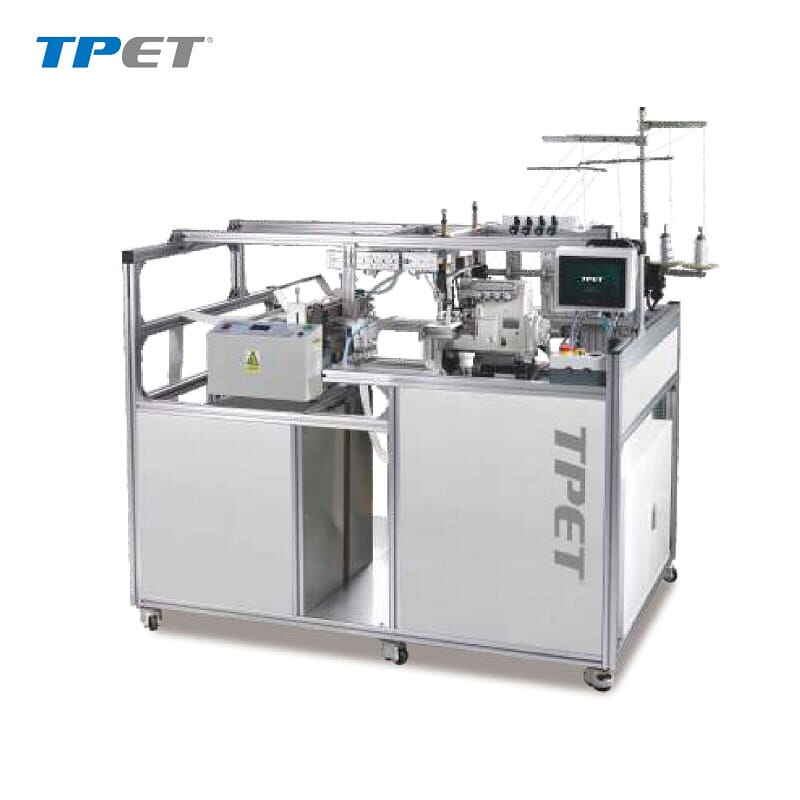
Sewing machines made specifically for industrial use are machines that are made and designed to be efficient and effective, and build to stand up against the rigors of an industrial or manufacturing environment. Sewing Machines are made up of several different types of machines, including lockstitch sewing machines, chain stitch sewing machines, overlock sewing machines, cover stitch sewing machines, buttonhole sewing machines, and bartack sewing machines.

The lockstitch sewing machine is used to construct a strong and durable seam on a woven fabric; the chain stitch sewing machine is used to sew many fasteners together; the overlock sewing machine will cut an edge with one continuous stitch and finish it at the same time; the cover stitch will create labels and hems; the buttonhole/bartack will secure items being sewn. Each category of sewers has various feeds, essentially a knife or a system that provides tension and helps move the fabric through the machine. 

F&Q About Different Types Of Industrial Sewing Machine

What are the main types of industrial sewing machines?

There are six main types of sewing machines: Lockstitch, Chainstitch, Overlock, Coverstitch, Blindstitch and Buttonhole.
When considering how we will stitch our items together, begin by considering the types of fabrics you have, how strong the seams need to be, the quantity you will be making, and how you will finish your products.
Regularly cleaning, oiling, replacing needles and bobbins, and adjusting tension are some examples of preventive maintenance, as is periodic professional servicing of the user’s machine with high-quality parts.
Controller upgrades to digital, servo motor upgrades, and modular attachments for servo motor-equipped systems are available on several models.

Get a Free Quote

Our representative will contact you soon.
Email
Name
Company Name
Message
0/1000