In today’s highly competitive textile and garment manufacturing industry, speed, consistency, and cost efficiency are essential for success. Manufacturers are constantly searching for advanced equipment that can increase productivity while maintaining superior product quality. One of the most important innovations in modern textile manufacturing is the mass production sewing machine. Designed specifically for high-volume industrial applications, these machines are engineered to deliver fast, accurate, and reliable sewing performance across a wide range of products.
From garment factories and home textile workshops to microfiber towel manufacturing and industrial fabric processing, mass production sewing machines have transformed the way businesses operate. Unlike traditional sewing equipment, industrial mass production machines are built for continuous operation, enabling manufacturers to produce thousands of products efficiently with minimal downtime.
For companies aiming to improve operational efficiency, reduce labor costs, and meet increasing market demands, investing in a mass production sewing machine is a strategic decision. In this article, we will explore the major advantages of using a mass production sewing machine and how it can help textile manufacturers improve quality, productivity, and profitability.
A mass production sewing machine is an industrial-grade sewing system specifically designed for continuous, high-speed production environments. These machines are commonly used in large-scale manufacturing facilities where efficiency and precision are critical.
Unlike household sewing machines, industrial mass production sewing machines are built with powerful motors, durable components, automated features, and specialized sewing functions. They are capable of handling heavy workloads over extended periods without sacrificing stitch quality.
Mass production sewing machines can be customized for various applications, including:
Apparel manufacturing
Microfiber towel production
Sportswear manufacturing
Upholstery sewing
Home textile production
Industrial fabric processing
Automotive textile applications
Medical textile production
Modern machines may include advanced automation technologies such as automatic thread trimming, programmable stitch patterns, computerized controls, fabric sensors, and synchronized feeding systems.
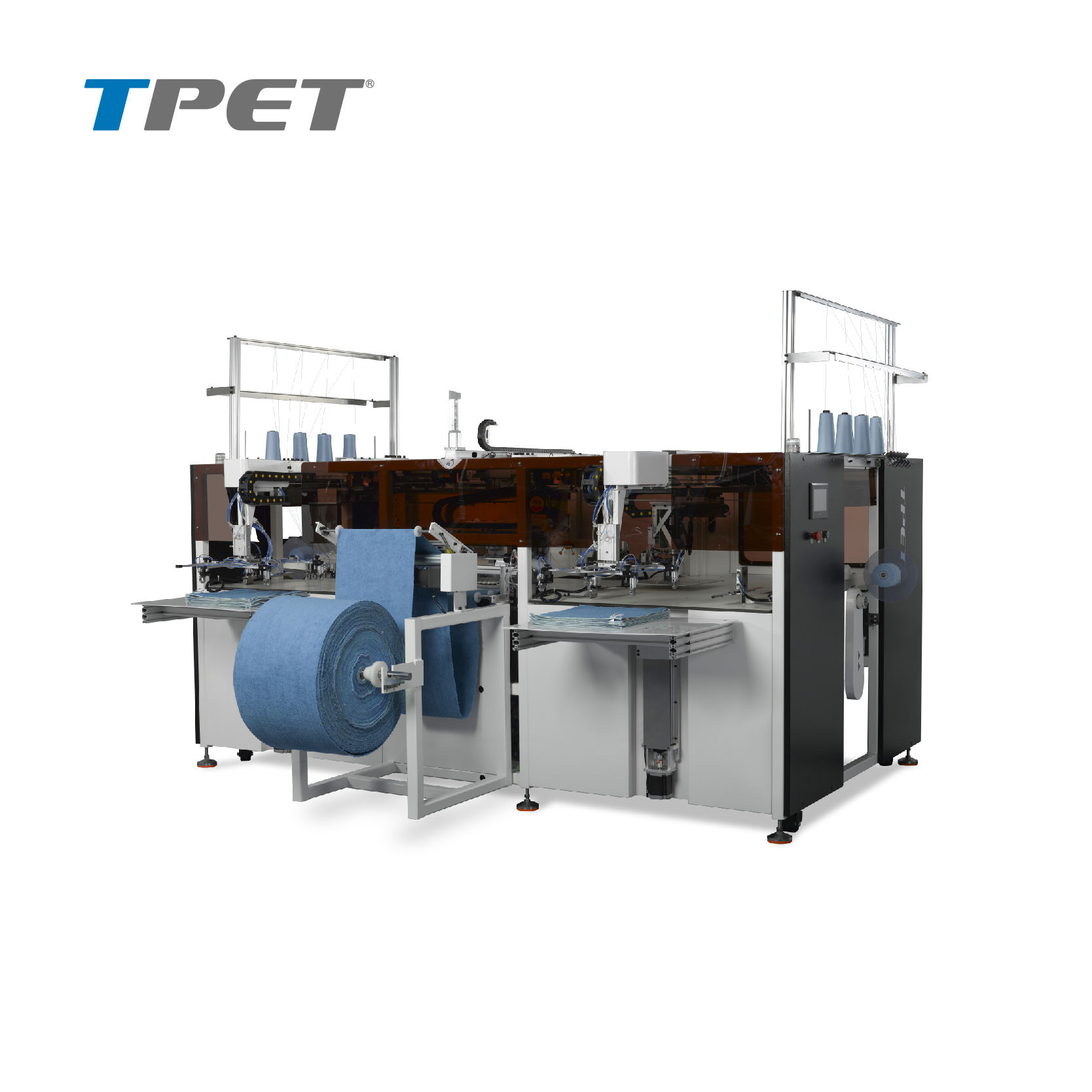
Mass production sewing machines offer multiple benefits that help modern textile manufacturers improve efficiency, quality, and profitability. The following key advantages highlight why these machines are essential in large-scale production environments.
One of the biggest advantages of using a mass production sewing machine is the ability to significantly improve production efficiency. Industrial sewing machines are designed for continuous operation and high-speed performance, allowing manufacturers to complete large orders in a much shorter time. Compared with ordinary sewing machines, industrial models can operate at several thousand stitches per minute without affecting sewing quality.
In large textile factories, production speed directly affects profitability and delivery performance. Faster sewing processes help businesses reduce production cycles and increase daily output. This is especially important for manufacturers handling bulk orders, seasonal demand, or international export requirements.
Mass production sewing machines also improve workflow organization. Automated functions such as thread trimming, automatic cutting, and synchronized feeding systems reduce manual operations and allow workers to focus on productivity and quality control.
Consistency is essential in textile manufacturing because customers expect every product to meet the same quality standards. Mass production sewing machines are engineered to deliver stable stitching performance, helping manufacturers maintain uniform seam quality throughout the entire production process.
Advanced tension control systems and precision feeding mechanisms ensure that fabrics move smoothly during sewing. This reduces problems such as skipped stitches, uneven seams, and fabric puckering. As a result, finished products look cleaner and more professional.
Consistent product quality helps manufacturers build customer trust and improve brand reputation. In industries such as microfiber towel production, sportswear manufacturing, and home textiles, precise stitching is critical for durability, appearance, and customer satisfaction.
Labor costs are one of the largest expenses in garment and textile manufacturing. By using mass production sewing machines, factories can increase operator productivity and reduce the amount of manual labor required for repetitive sewing tasks.
Modern industrial sewing machines include automatic features such as thread trimming, back-tacking, and programmable stitching patterns. These functions help operators work more efficiently while minimizing physical effort and reducing human error.
Because production becomes faster and more automated, manufacturers can achieve higher output with fewer workers. This helps businesses lower operating costs while maintaining strong production performance and product quality.
Mass production sewing machines are built for heavy-duty industrial use. Unlike household sewing machines, industrial equipment is designed to operate continuously for long working hours in demanding factory environments.
Most industrial sewing machines are manufactured using reinforced metal frames, high-performance motors, and durable internal components. These features allow the machines to maintain stable performance even during high-speed production.
Reliable equipment reduces machine downtime and minimizes production interruptions. For manufacturers, fewer breakdowns mean lower maintenance costs, improved efficiency, and more consistent order fulfillment.
Modern mass production sewing machines are highly versatile and can process a wide range of materials. From lightweight microfiber fabrics to thick industrial textiles, these machines are designed to handle different fabric types with excellent precision.
Specialized sewing systems can be configured for cotton, polyester, knitted fabrics, denim, nonwoven materials, and technical textiles. Advanced feeding systems help maintain smooth fabric movement and prevent material distortion during sewing.
This flexibility allows manufacturers to expand their product lines and serve multiple industries. Businesses can use the same production facility to manufacture garments, cleaning products, home textiles, and industrial fabric products efficiently.
Automation is becoming increasingly important in modern manufacturing, and mass production sewing machines now include many intelligent technologies that improve operational efficiency. Computerized control systems allow operators to adjust settings quickly and accurately.
Many machines support programmable stitch patterns, automatic thread cutting, fabric sensors, and error detection systems. These features help improve sewing accuracy while reducing production mistakes and material waste.
Smart automation also improves production management. Some advanced machines can monitor operating performance, maintenance schedules, and production data in real time, helping factories optimize workflow and reduce downtime.
Energy efficiency has become a major priority for manufacturers seeking to reduce operating costs and support environmentally friendly production practices. Many modern mass production sewing machines use servo motor technology that consumes significantly less electricity than traditional clutch motors.
Servo motors operate only when the machine is actively sewing, which helps reduce unnecessary energy consumption. They also provide smoother speed control and quieter operation, creating a more comfortable workplace environment.
Lower power consumption can result in substantial long-term savings for large factories operating multiple machines every day. Energy-efficient equipment also helps companies meet sustainability goals and improve environmental responsibility.
As textile businesses grow, they need equipment that can support increasing production demands. Mass production sewing machines make it easier for manufacturers to scale operations without dramatically increasing labor costs.
With high-speed sewing capabilities and automated functions, factories can increase output while maintaining stable quality standards. This allows businesses to respond quickly to market demand and large customer orders.
Scalable production capacity is particularly important for export-oriented manufacturers and companies supplying major retail brands. Efficient production systems help businesses remain competitive in global markets.
Material waste can negatively impact manufacturing costs and profitability. Precision sewing technology helps reduce errors, defective products, and unnecessary fabric loss during production.
Accurate stitching and stable fabric control minimize the need for product rework and repairs. Automated systems also improve production consistency, helping factories maintain better material utilization rates.
Reducing waste not only lowers production expenses but also supports sustainable manufacturing practices. Many textile companies are now focusing on eco-friendly production methods to meet growing customer expectations for environmental responsibility.
Although industrial mass production sewing machines require a larger initial investment, they often provide excellent long-term financial value. Increased productivity, lower labor costs, and improved efficiency all contribute to higher profitability.
Durable industrial machines are designed for long service life, which helps manufacturers maximize equipment value over many years of operation. Reliable performance also reduces maintenance expenses and minimizes costly production delays.
For textile manufacturers, investing in advanced sewing equipment can improve competitiveness, increase customer satisfaction, and support long-term business growth. The combination of speed, quality, and operational efficiency makes mass production sewing machines a smart investment for modern factories.
Mass production sewing machines are essential in modern textile manufacturing, enabling factories to achieve higher efficiency, consistency, and scalability. As global demand for textiles continues to grow, manufacturers must rely on advanced equipment to stay competitive.
Across all advantages discussed—higher efficiency, consistent quality, reduced labor costs, durability, fabric versatility, automation, energy savings, scalability, waste reduction, and strong return on investment—these machines significantly improve overall production performance. They help businesses streamline workflows, reduce errors, and ensure stable output even under large-scale production pressure.
Looking ahead, smart manufacturing and automation will further enhance sewing technology, making production more intelligent and efficient. Manufacturers that invest in modern industrial sewing machines will gain long-term competitive advantages in quality control and cost efficiency. TPET is committed to providing advanced sewing solutions that support manufacturers in achieving sustainable growth and success in the global textile industry.

The TPET ET-6620 Automatic Pillow Cover Machine (US Type) is a high-efficiency, intelligent solution designed to revolutionize the production of American-style pillowcases, tailored to meet the demands of modern textile manufacturing. Built for speed...

The TPET ET-5816/GG 2nd Generation Automatic Terry Towel Length Hemming Machine is a state-of-the-art solution designed to revolutionize towel production efficiency and quality. As the main drafting unit of the industry standard “Automatic towe...

The ET-6628 Envelope Pillow Case Machine: A Milestone in Automated AB-Side Envelop Production From TPET Company.In the competitive landscape of modern textile manufacturing, efficiency, precision, and versatility are paramount. The ET-6628 Envelope P...

Equipped with advanced magnetic navigation technology, the autonomous vehicle ensures accurate path following and stable operation.

This automatic delivery vehicle is equipped with magnetic navigation technology and is designed for seamless integration with production lines.

 EN
EN