In today’s highly competitive textile manufacturing landscape, efficiency, consistency, and scalability are no longer optional—they are essential for survival and growth. Manufacturers across the globe are under constant pressure to deliver superior-quality products at faster turnaround times while keeping operational costs under control. Among home textile categories, bath towels hold a stable and significant share of the market due to their everyday necessity and continuous consumer demand.
However, producing bath towels at scale is not as straightforward as it may seem. Their large size, thick terry fabric, and quality expectations present unique production challenges. Achieving strong seams, clean finishes, and uniform output requires more than traditional sewing methods. This is where advanced bath towel sewing machines come into play.
A modern bath towel sewing machine is more than just a piece of industrial equipment—it is a complete, intelligent production solution. Designed with automation, precision, and speed in mind, these machines are helping manufacturers transition from labor-intensive operations to efficient, data-driven smart factories.
Bath towels differ significantly from smaller textile items due to their size, thickness, and material properties. Handling large fabric pieces introduces several operational challenges:
Fabric bulk and weight: Thick terry cloth can be difficult to guide consistently.
Edge alignment: Maintaining straight, even seams across wide edges requires precision.
Consistency at scale: Manual sewing often leads to variations in stitch quality.
Labor intensity: Large towels typically require skilled operators, increasing labor costs.
Traditional sewing setups struggle to meet modern production demands, especially when manufacturers aim for both high output and premium quality. As a result, automation becomes not just beneficial—but essential.
A bath towel sewing machine is a specialized industrial system engineered specifically for handling large, thick textile products. Unlike standard sewing machines, it integrates multiple automated functions into a single streamlined process.
These machines are designed to perform tasks such as:
Hemming towel edges with precision
Seaming large bath towels efficiently
Attaching decorative borders, trims, or labels
Reinforcing edges to enhance durability
By combining feeding, alignment, stitching, and trimming into one automated workflow, bath towel sewing machines significantly reduce manual intervention. This not only speeds up production but also ensures consistent quality across every unit.
One of the most defining features of modern bath towel sewing machines is their high-speed seaming capability. However, speed alone is not the goal—what truly matters is maintaining precision and quality at high speeds.
High-speed sewing machines can process a significantly larger number of towels per hour compared to traditional setups. This allows manufacturers to meet bulk orders efficiently and respond quickly to market demands.
For businesses handling large-scale contracts—such as hotel chains or retail brands—this increase in throughput can be a major competitive advantage.
Advanced control systems ensure uniform stitch length, thread tension, and seam alignment. Even when operating at high speeds, the machine maintains consistent quality across all products.
This consistency is critical for maintaining brand reputation, especially in premium markets where customers expect flawless finishes.
Automation minimizes the need for continuous manual handling. Operators are no longer required to guide heavy fabrics throughout the entire sewing process. Instead, they can focus on monitoring and quality control.
This not only improves productivity but also reduces errors caused by fatigue, leading to a more efficient and comfortable working environment.
Modern bath towel sewing machines are designed to be part of a larger smart manufacturing ecosystem. Their intelligent features enable seamless integration into automated production lines.
Automated feeding systems ensure that towels are guided smoothly and consistently into the sewing area. Precision alignment mechanisms eliminate the need for manual adjustments, reducing errors and increasing efficiency.
Equipped with advanced sensors, these machines can detect fabric edges in real time. This allows for automatic trimming and ensures clean, uniform finishes on every towel.
The result is a professional appearance with minimal material waste.
Manufacturers can easily switch between different towel sizes, designs, and stitching patterns using programmable settings. This flexibility is particularly valuable for companies producing a wide range of products.
Digital control panels provide real-time insights into machine performance, including speed, output, and error rates. This data-driven approach allows manufacturers to optimize operations, reduce downtime, and improve overall efficiency.
Labor remains one of the largest expenses in textile manufacturing. High-speed bath towel sewing machines offer a practical solution for reducing labor dependency while maintaining high productivity.
A single automated machine can replace multiple manual workstations. This significantly reduces the number of operators needed on the production floor.
Modern machines are designed with user-friendly interfaces, making them easier to operate. Even workers with minimal experience can quickly learn to manage the system.
Precision sewing minimizes errors such as misaligned seams or incorrect stitching. This reduces fabric waste and improves overall material utilization.
Over time, these benefits contribute to a strong return on investment, making automation a strategic choice for forward-thinking manufacturers.
In addition to efficiency, quality remains a top priority in towel manufacturing. Consumers expect bath towels to be durable, visually appealing, and comfortable to use.
Advanced sewing machines help achieve these standards by ensuring:
Strong, durable seams that withstand repeated washing
Smooth edges without fraying or loose threads
Uniform appearance across large production batches
For brands targeting high-end markets—such as luxury hotels, spas, and premium retailers—this level of quality is essential for maintaining customer satisfaction and brand value.
Although specifically designed for bath towels, these machines are highly versatile and can be used for a wide range of home textile products, including:
Beach towels
Hotel and hospitality towels
Spa and luxury towels
Kitchen towels
Bathrobes and similar garments
This flexibility allows manufacturers to expand their product lines without investing in multiple specialized machines, maximizing equipment utilization and reducing capital expenditure.
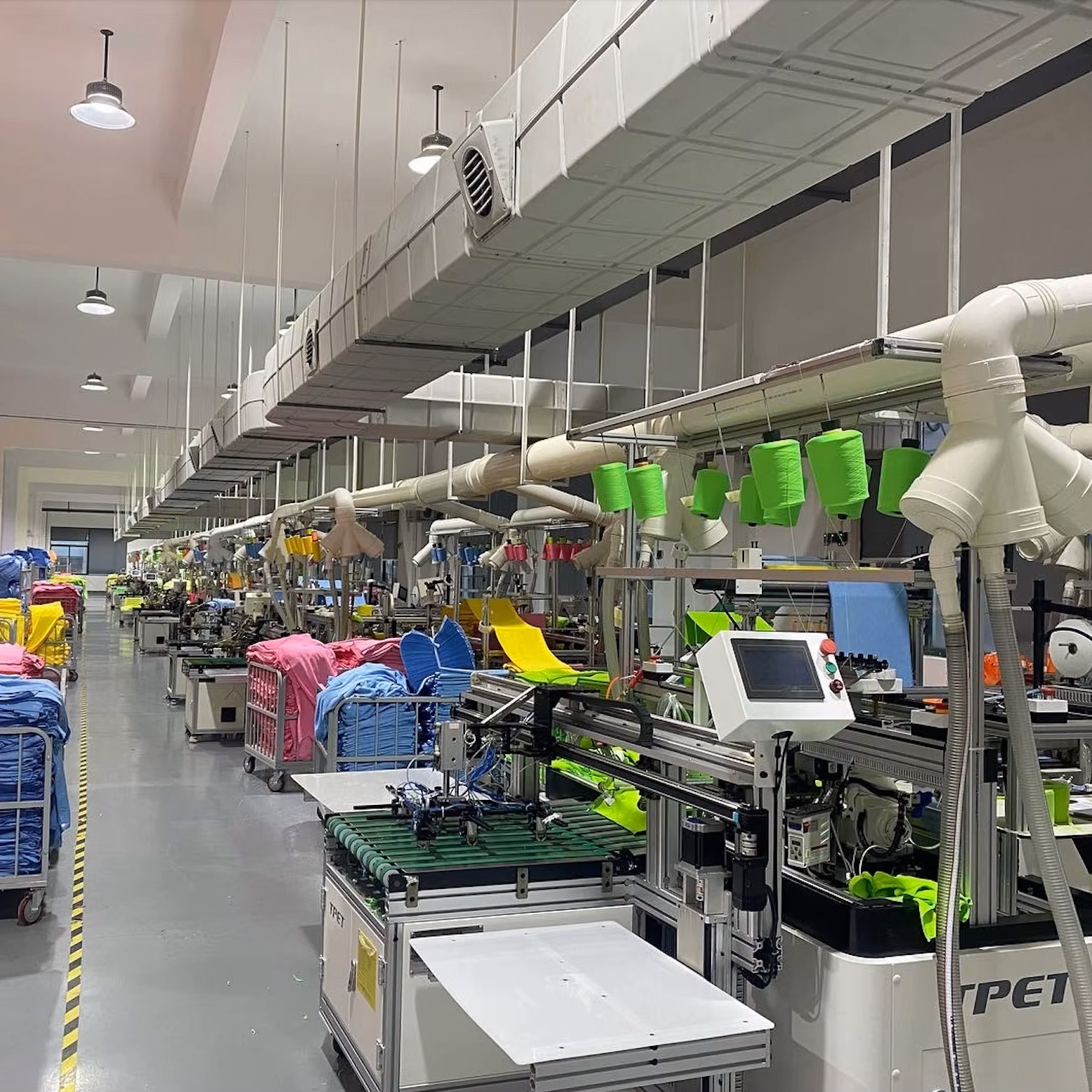
Selecting the right bath towel sewing machine is a strategic investment that can significantly influence production efficiency, product quality, and overall profitability. As global demand for high-quality home textiles continues to grow, manufacturers must carefully evaluate several critical factors before making a decision.
One of the most important considerations is the machine’s ability to operate at high speeds without sacrificing stitch quality. Bath towels are typically large and thick, which requires robust feeding systems and stable stitching performance. A high-speed machine allows manufacturers to meet bulk production demands, reduce turnaround time, and stay competitive in fast-paced markets.
However, speed should always be balanced with precision—consistent seam strength and neat finishing are essential for maintaining product standards.
Modern textile manufacturing increasingly relies on automation to improve efficiency and reduce labor dependency. Advanced bath towel sewing machines often come equipped with features such as automatic fabric feeding, edge alignment systems, thread trimming, and programmable sewing patterns. T
hese functions not only streamline operations but also minimize human error, ensuring consistent output quality across large production batches. Investing in a highly automated system can significantly lower operational costs over time.
A machine that is difficult to operate can slow down production and increase training costs. User-friendly interfaces, touchscreen controls, and intuitive programming systems are essential for improving workflow efficiency. Operators should be able to quickly learn and manage the machine with minimal supervision.
Additionally, machines with error detection systems and simple maintenance procedures help reduce downtime and keep production running smoothly.
Given the demanding nature of towel manufacturing—handling thick fabrics, long working hours, and continuous operation—durability is a key factor. Industrial-grade construction, high-quality components, and precision engineering ensure that the machine can withstand heavy use over time.
A well-built machine not only reduces maintenance frequency but also extends its service life, providing better return on investment.
Manufacturers often produce a variety of towel types, including different sizes, materials, and designs. A versatile sewing machine that can easily adapt to these variations is highly valuable. Adjustable settings, programmable stitch patterns, and compatibility with different fabric thicknesses allow businesses to diversify their product offerings without needing multiple machines. Flexibility also enables quicker response to changing market trends and customer demands.
When it comes to combining speed, precision, and intelligent automation, TPET stands out as a reliable partner for textile manufacturers worldwide. TPET is committed to delivering high-performance industrial sewing machines specifically designed to meet the evolving needs of home textile production.
Bath towel production is undergoing a significant shift from traditional, labor-intensive methods to modern, automated processes. High-speed bath towel sewing machines offer a powerful solution for manufacturers looking to stay competitive in a demanding market.
With features such as automatic feeding, edge detection, programmable controls, and real-time monitoring, these machines streamline production while ensuring consistent, high-quality output. They not only reduce labor costs and material waste but also enhance overall operational efficiency.
For textile and garment manufacturers aiming to scale their operations and meet evolving market demands, investing in advanced bath towel sewing technology is more than just an upgrade—it is a strategic step toward building a smarter, more efficient, and future-ready manufacturing system.

The TPET ET-6620 Automatic Pillow Cover Machine (US Type) is a high-efficiency, intelligent solution designed to revolutionize the production of American-style pillowcases, tailored to meet the demands of modern textile manufacturing. Built for speed...

The TPET ET-5816/GG 2nd Generation Automatic Terry Towel Length Hemming Machine is a state-of-the-art solution designed to revolutionize towel production efficiency and quality. As the main drafting unit of the industry standard “Automatic towe...

The ET-6628 Envelope Pillow Case Machine: A Milestone in Automated AB-Side Envelop Production From TPET Company.In the competitive landscape of modern textile manufacturing, efficiency, precision, and versatility are paramount. The ET-6628 Envelope P...

Equipped with advanced magnetic navigation technology, the autonomous vehicle ensures accurate path following and stable operation.

This automatic delivery vehicle is equipped with magnetic navigation technology and is designed for seamless integration with production lines.

 EN
EN