In today’s competitive manufacturing industry, efficiency, precision, and consistency are more important than ever. Companies in the garment, automotive, furniture, footwear, and textile industries are constantly seeking ways to improve productivity while reducing labor costs and production errors. This is where a fully automatic industrial sewing machine becomes a valuable investment.
Unlike traditional sewing equipment that relies heavily on manual operation, fully automatic industrial sewing machines use advanced technology to streamline sewing processes, improve stitch quality, and increase production speed. For manufacturers aiming to enhance operational performance, automation provides significant long-term advantages.
One of the biggest benefits of a fully automatic industrial sewing machine is its ability to dramatically improve production efficiency. Automatic systems can perform repetitive sewing tasks at much higher speeds than manual machines while maintaining stable performance throughout long production runs.
Operators spend less time adjusting fabric, controlling stitching patterns, or correcting mistakes. Many automatic machines include programmable functions that allow manufacturers to save sewing parameters and repeat the same process consistently. This reduces downtime and helps factories meet tight production schedules more effectively.
For high-volume production environments, improved efficiency directly translates into increased output and higher profitability.
Consistency is critical in industrial manufacturing. Variations in stitch length, thread tension, or seam alignment can negatively affect product quality and customer satisfaction. Fully automatic industrial sewing machines are designed to minimize human error and deliver uniform stitching across every product.
Advanced control systems ensure accurate sewing patterns, stable thread tension, and precise fabric handling. Whether producing garments, upholstery, technical textiles, or leather products, manufacturers can maintain the same high-quality standards throughout the entire production process.
Consistent quality also reduces product rejection rates and lowers material waste, helping companies improve overall manufacturing performance.
Labor shortages and rising labor costs continue to challenge manufacturers worldwide. Fully automatic industrial sewing machines help businesses reduce dependence on manual labor by automating complex or repetitive sewing operations.
With automation, fewer operators are required to manage production lines, and workers can focus on higher-value tasks such as quality inspection, machine monitoring, and process optimization. In addition, automatic machines often require less operator training compared to traditional sewing equipment because many functions are controlled digitally.
By reducing labor intensity and improving workflow efficiency, companies can achieve significant cost savings over time.
Modern industrial products often require highly accurate stitching and specialized sewing patterns. Fully automatic industrial sewing machines are equipped with advanced positioning systems and programmable controls that enable extremely precise operations.
This level of precision is especially important in industries such as automotive interiors, medical textiles, sports equipment, and technical fabrics, where accuracy directly affects product performance and safety.
Automatic sewing systems can handle complex stitching designs, multi-layer materials, and difficult fabrics with greater stability than manual machines. As a result, manufacturers can expand their production capabilities and meet more demanding customer requirements.
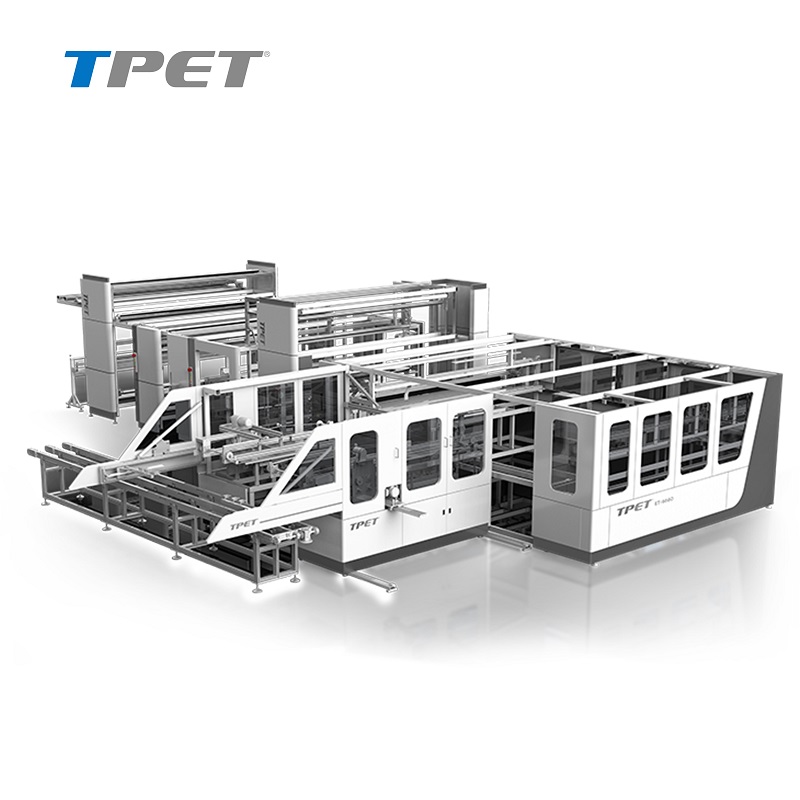
Industrial automation also contributes to a safer working environment. Traditional sewing operations may involve repetitive motions, long working hours, and constant operator involvement, which can increase the risk of fatigue and workplace injuries.
Fully automatic industrial sewing machines reduce direct operator interaction with moving parts and repetitive sewing tasks. Many machines include built-in safety features such as automatic thread trimming, needle positioning, sensor monitoring, and emergency stop systems.
A safer and more comfortable workplace can improve employee satisfaction while reducing operational risks for manufacturers.
Material waste can significantly impact production costs, especially when working with expensive fabrics, leather, or technical materials. Automatic industrial sewing machines improve cutting and sewing accuracy, helping manufacturers reduce errors that lead to wasted materials.
Because the sewing process is digitally controlled, manufacturers can achieve better fabric utilization and minimize defective products caused by inconsistent stitching or incorrect alignment. Over time, reduced waste contributes to both cost savings and more sustainable manufacturing practices.
For companies seeking environmentally responsible production methods, automation can support sustainability goals while improving operational efficiency.
Many modern fully automatic industrial sewing machines are designed with smart manufacturing capabilities. They can integrate with digital production management systems, allowing manufacturers to monitor machine performance, track production data, and optimize workflows in real time.
Features such as touch-screen controls, programmable sewing patterns, automatic diagnostics, and IoT connectivity help factories improve operational transparency and reduce maintenance downtime.
As Industry 4.0 continues to reshape manufacturing, smart sewing automation provides businesses with greater flexibility and better control over production processes.
Although fully automatic industrial sewing machines require a higher initial investment compared to conventional equipment, they often provide excellent long-term value. Increased production speed, lower labor costs, reduced waste, and improved product quality all contribute to faster return on investment.
In addition, automatic machines are typically designed for heavy-duty industrial use, offering durability and reliable performance in demanding manufacturing environments. With proper maintenance, these machines can support continuous production for many years.
For businesses focused on long-term growth and competitiveness, investing in automation is often a strategic decision rather than simply an equipment upgrade.
Fully automatic industrial sewing machines are transforming modern manufacturing by improving efficiency, consistency, precision, and productivity. From reducing labor costs to enhancing product quality, automation offers substantial advantages for companies across multiple industries.
As global competition increases and manufacturing standards continue to evolve, businesses that adopt advanced sewing automation technologies are better positioned to improve operational performance and meet changing market demands.
For manufacturers looking to increase productivity and stay competitive, a fully automatic industrial sewing machine is not only a smart investment but also an important step toward the future of industrial production.

The TPET ET-6620 Automatic Pillow Cover Machine (US Type) is a high-efficiency, intelligent solution designed to revolutionize the production of American-style pillowcases, tailored to meet the demands of modern textile manufacturing. Built for speed...

The TPET ET-5816/GG 2nd Generation Automatic Terry Towel Length Hemming Machine is a state-of-the-art solution designed to revolutionize towel production efficiency and quality. As the main drafting unit of the industry standard “Automatic towe...

The ET-6628 Envelope Pillow Case Machine: A Milestone in Automated AB-Side Envelop Production From TPET Company.In the competitive landscape of modern textile manufacturing, efficiency, precision, and versatility are paramount. The ET-6628 Envelope P...

Equipped with advanced magnetic navigation technology, the autonomous vehicle ensures accurate path following and stable operation.

This automatic delivery vehicle is equipped with magnetic navigation technology and is designed for seamless integration with production lines.

 EN
EN