In today’s competitive textile industry, efficiency, consistency, and adaptability are no longer optional—they are essential. As global demand for natural textiles continues to rise, particularly for cotton-based products like towels, manufacturers must adopt advanced machinery that meets both production and quality expectations. A high-performance cotton towel sewing machine is a critical asset for factories seeking to optimize output while maintaining superior craftsmanship.
TPET specializes in delivering innovative automatic industrial sewing solutions designed to empower textile manufacturers worldwide. Our high-speed sewing systems are engineered specifically for natural textiles, ensuring precision, durability, and scalability for modern production environments.
Cotton towels continue to be essential across households, hospitality, healthcare, and wellness sectors, valued for their softness, high absorbency, and natural sustainability. As consumers increasingly favor eco-friendly and natural fibers, cotton towels have seen steady global demand growth.
However, manufacturing cotton towels at scale comes with distinct technical challenges. Thick, looped terry fabrics require precise handling, while variations in fabric density can make it difficult to maintain uniform stitching. Issues such as fraying, distortion, and inconsistent seams can compromise product quality, especially under high-speed production conditions.
To overcome these obstacles, manufacturers rely on specialized cotton towel sewing machines designed to deliver both efficiency and precision without sacrificing durability or finish.
A high-performance sewing machine for cotton towels is not just about speed—it’s about precision engineering tailored to the characteristics of natural textiles. Key features include:
High-speed capability is essential in modern towel manufacturing, but speed alone is not enough. A high-performance cotton towel sewing machine must maintain stability during continuous operation, ensuring that increased output does not come at the expense of product quality. Excessive vibration or machine imbalance at high speeds can lead to stitching defects, thread breakage, and operator fatigue.
Advanced machines are equipped with servo motor systems that deliver precise control and energy efficiency. Reinforced frames, balanced internal components, and optimized drive systems work together to minimize vibration. This allows manufacturers to run machines at consistently high speeds over long production cycles while maintaining smooth, reliable performance.
Consistency in stitching is critical for cotton towels, as uneven seams can weaken the structure and reduce product appeal. High-performance machines are designed to provide precise stitch control, ensuring that every towel meets strict quality standards regardless of fabric thickness or texture variations.
Features such as adjustable stitch length and density enable operators to customize settings for different towel types. Automatic thread tension control further enhances consistency by adapting in real time, while advanced engineering ensures uniform seams across both thick terry loops and thinner sections. The result is a clean, professional finish that enhances durability and aesthetics.
Cotton towels, particularly terry cloth, present unique handling challenges due to their bulk, softness, and uneven surface. Standard sewing machines often struggle with multi-layered or dense fabrics, leading to shifting, puckering, or misaligned seams during production.
High-performance machines are built with robust feeding mechanisms capable of handling thick and layered materials with ease. Enhanced presser foot pressure control ensures the fabric remains stable, while anti-slip feeding systems guide the material smoothly through the sewing process. These features work together to maintain accurate seam alignment and reduce material waste.
Automation has become a key factor in improving efficiency and reducing labor dependency in textile manufacturing. High-performance cotton towel sewing machines integrate smart features that streamline production processes and minimize the need for manual intervention.
Functions such as automatic edge trimming and thread cutting help speed up the workflow and maintain consistency. Programmable stitching patterns allow for flexibility in design, while sensor-based error detection systems identify issues in real time, reducing defects and downtime. These intelligent capabilities significantly enhance productivity and operational efficiency.
In industrial environments, sewing machines must endure long hours of continuous operation under demanding conditions. A high-performance machine is built with durability in mind, using high-quality components that can withstand wear and tear without compromising performance.
Additionally, low-maintenance design is crucial for minimizing downtime and operational costs. Wear-resistant materials, simplified lubrication systems, and easy-access components make routine maintenance more efficient. This ensures long-term reliability, allowing manufacturers to maintain consistent production output with fewer interruptions.
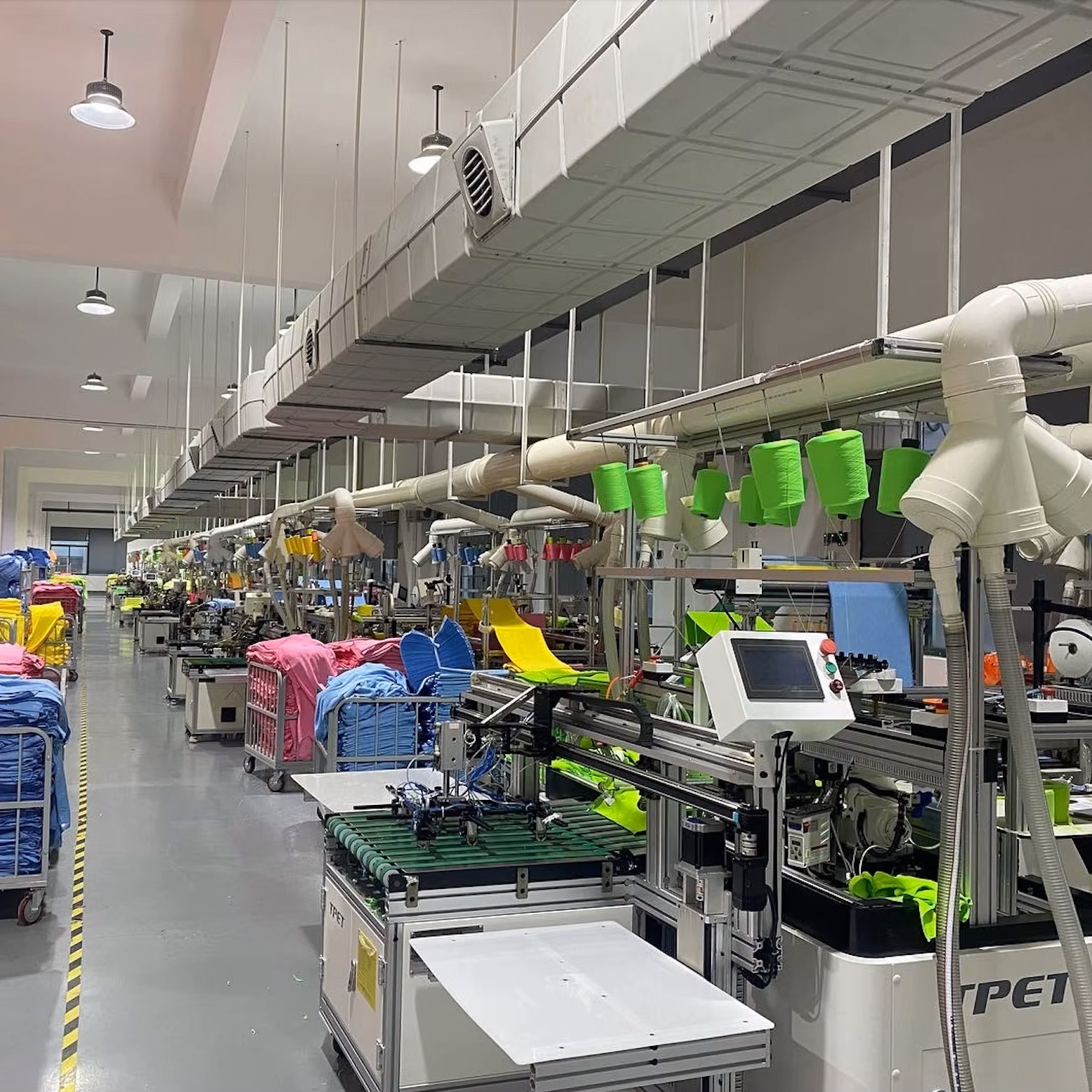
Investing in a high-performance cotton towel sewing machine brings measurable advantages:
Investing in a high-performance cotton towel sewing machine significantly boosts production efficiency. With the ability to operate at consistently high speeds, these machines can handle large volumes of towels within shorter timeframes, enabling manufacturers to meet tight deadlines and increase order capacity without expanding floor space.
Maintaining uniform quality is essential in the competitive textile market, especially for products like cotton towels, where appearance and durability directly impact customer satisfaction. High-performance machines are engineered to deliver precise, repeatable stitching, ensuring that every product meets the same high standards.
Labor efficiency is a critical factor in modern manufacturing, and high-performance sewing machines are designed to optimize workforce utilization. By automating complex or repetitive tasks, these machines reduce the need for constant manual adjustments and monitoring. As a result, a single operator can oversee multiple machines simultaneously, improving overall labor productivity.
Raw material costs represent a significant portion of textile production expenses, making efficient fabric utilization essential. High-performance sewing machines enhance material efficiency through precise fabric handling and accurate stitching, minimizing errors that can lead to waste.
As businesses grow, their production requirements evolve, requiring flexible and scalable manufacturing solutions. High-performance cotton towel sewing machines are designed to integrate seamlessly into both small-scale workshops and large automated production lines.
While designed primarily for cotton towels, these machines are highly versatile and can be effectively used across a broad range of natural textile applications. They are commonly applied in manufacturing bath towels, hand towels, beach towels, hotel and spa linens, baby textiles, cotton blankets, and robes.
Their adaptability to different fabric weights, textures, and product designs makes them a highly valuable investment for manufacturers aiming to expand beyond a single product line. Whether working with lightweight cotton fabrics or dense terry materials, these machines maintain stable performance and consistent stitching quality, ensuring reliable output across varied production requirements.
Selecting the right machine requires careful evaluation of your production needs. Here are some factors to consider:
High-volume factories require machines that can operate continuously at high speeds with minimal downtime. For smaller operations or businesses with variable order sizes, flexibility may be more important than maximum speed. Choosing equipment that aligns with your current production volume—while leaving room for future growth—helps avoid underutilization or capacity bottlenecks.
Ensure the machine is capable of handling the specific weight and texture of your cotton materials, especially terry cloth. If your production includes multiple towel types—such as lightweight kitchen towels and heavy bath towels—the machine must be versatile enough to manage these differences efficiently without frequent adjustments or performance issues.
Automation plays a key role in determining both productivity and labor efficiency. Highly automated machines can perform tasks such as thread trimming, edge finishing, and pattern stitching with minimal operator input, significantly speeding up production and reducing the likelihood of human error. Choose a system that aligns with your workforce capabilities and desired level of operational efficiency.
Even the most advanced sewing machine requires ongoing maintenance and occasional technical support. Reliable after-sales service is essential to ensure that your equipment continues to operate at peak performance over time. This includes access to spare parts, timely technical assistance, and professional maintenance services.
TPET understands the evolving needs of textile manufacturers. Our automatic industrial sewing machines are designed with a focus on innovation, efficiency, and durability.
Our machines incorporate cutting-edge technology to deliver high-speed performance without compromising precision. Moreover, we offer tailored solutions to meet specific production requirements, ensuring optimal results for different types of cotton textiles.
With experience serving textile factories worldwide, we provide solutions that align with international standards and diverse market demands. From installation to maintenance, our dedicated support team ensures that your operations run smoothly at all times.
A high-performance cotton towel sewing machine is more than just a piece of equipment—it is a strategic investment in efficiency, quality, and long-term growth. For manufacturers working with natural textiles, the right machine can transform production capabilities, reduce costs, and enhance competitiveness in a demanding global market.
TPET is committed to supporting textile manufacturers with advanced automatic sewing solutions designed for real industrial needs. Through continuous innovation, reliable machine performance, and user-focused design, we help customers enhance productivity and achieve stable, scalable growth in their production lines.
If you are planning to upgrade your production system or expand your capabilities in cotton towel manufacturing, investing in high-performance sewing technology is a practical step toward improving efficiency and strengthening your market position.

The TPET ET-6620 Automatic Pillow Cover Machine (US Type) is a high-efficiency, intelligent solution designed to revolutionize the production of American-style pillowcases, tailored to meet the demands of modern textile manufacturing. Built for speed...

The TPET ET-5816/GG 2nd Generation Automatic Terry Towel Length Hemming Machine is a state-of-the-art solution designed to revolutionize towel production efficiency and quality. As the main drafting unit of the industry standard “Automatic towe...

The ET-6628 Envelope Pillow Case Machine: A Milestone in Automated AB-Side Envelop Production From TPET Company.In the competitive landscape of modern textile manufacturing, efficiency, precision, and versatility are paramount. The ET-6628 Envelope P...

Equipped with advanced magnetic navigation technology, the autonomous vehicle ensures accurate path following and stable operation.

This automatic delivery vehicle is equipped with magnetic navigation technology and is designed for seamless integration with production lines.

 EN
EN