The global cleaning industry has experienced rapid growth in recent years, driven by increasing demand from commercial cleaning companies, automotive detailing businesses, hospitality services, healthcare facilities, and household cleaning product suppliers. Among the many products used in modern cleaning applications, microfiber towels have become one of the most essential tools due to their superior absorbency, durability, softness, and cleaning efficiency.
As the market for microfiber cleaning products continues to expand, manufacturers are under increasing pressure to improve production speed, product consistency, and overall quality. One of the most important factors in achieving these goals is the use of a specialized microfiber towel sewing machine designed specifically for the cleaning industry.
A specialized microfiber towel sewing machine helps manufacturers produce premium-quality towels with precise stitching, reduced labor costs, and higher production capacity. This article explores the importance of microfiber towel sewing machines, their key features, advantages, applications, and how they are transforming the cleaning textile manufacturing industry.
Microfiber towels have become the preferred choice for cleaning professionals worldwide. Unlike traditional cotton towels, microfiber products are made from ultra-fine synthetic fibers that can effectively trap dust, dirt, grease, and moisture without scratching surfaces.
These towels are widely used in:
Automotive detailing
Household cleaning
Commercial janitorial services
Hotels and restaurants
Hospitals and healthcare facilities
Industrial cleaning
Electronics cleaning
Glass and window cleaning
The increasing demand for high-performance cleaning textiles has created a strong need for efficient and reliable production equipment. Traditional sewing machines often struggle to handle microfiber materials efficiently because the fabric is lightweight, soft, stretchable, and prone to edge curling. This is why specialized sewing machines are essential for manufacturers aiming to produce high-quality microfiber towels consistently.
A specialized microfiber towel sewing machine is an industrial sewing system engineered specifically for processing microfiber fabrics used in cleaning products. These machines are designed to provide accurate stitching, smooth fabric feeding, high-speed operation, and durable seam quality.
Unlike general-purpose sewing machines, microfiber towel sewing machines are optimized for the unique characteristics of microfiber materials. They can efficiently sew hems, edges, overlock seams, binding edges, and decorative stitching while minimizing fabric distortion and thread breakage.
These machines are commonly used in the production of:
Microfiber cleaning towels
Car detailing towels
Kitchen cleaning cloths
Floor cleaning pads
Polishing cloths
Glass cleaning towels
Coral fleece towels
Warp knit microfiber towels
By using specialized sewing technology, manufacturers can significantly improve both productivity and product quality.
Modern microfiber towel sewing machines are built for high-speed industrial production. Advanced servo motors and precision control systems allow the machine to operate at high speeds while maintaining stitch consistency.
High-speed production helps manufacturers:
Increase daily output
Reduce production time
Improve operational efficiency
Meet large-scale export orders
For cleaning textile manufacturers serving international markets, high-speed automation is critical for staying competitive.
Microfiber towels require clean and durable edges to prevent fraying during repeated use and washing. Specialized sewing machines provide highly accurate edge stitching, ensuring professional-quality finished products.
Common sewing methods include:
Overlock stitching
Hemming
Binding edge sewing
Ultrasonic edge sealing
Zigzag stitching
Precise edge sewing improves both product durability and appearance.
Automatic thread trimming systems reduce manual labor and improve production speed. After completing the sewing process, the machine automatically cuts the thread cleanly, eliminating unnecessary handling.
Benefits include:
Reduced labor costs
Cleaner product appearance
Faster workflow
Lower operator fatigue
Automation features are becoming increasingly important in modern textile factories.
Microfiber fabric can be difficult to handle because it is soft and lightweight. Specialized sewing machines use advanced feeding mechanisms that ensure smooth and stable fabric movement during operation.
This helps prevent:
Fabric slipping
Wrinkling
Uneven stitching
Material distortion
Consistent fabric feeding is essential for producing premium microfiber towels.
Many modern industrial sewing machines use energy-saving servo motors instead of traditional clutch motors. Servo motor systems provide quieter operation, lower energy consumption, and better speed control.
Advantages include:
Reduced electricity costs
Lower machine noise
Improved operator comfort
Enhanced sewing precision
Energy-efficient equipment also supports environmentally sustainable manufacturing practices.
Advanced microfiber towel sewing machines are designed with operator convenience in mind. Features such as touchscreen control panels, programmable settings, and automatic error detection make operation easier and more efficient.
User-friendly systems reduce training time and improve production management.
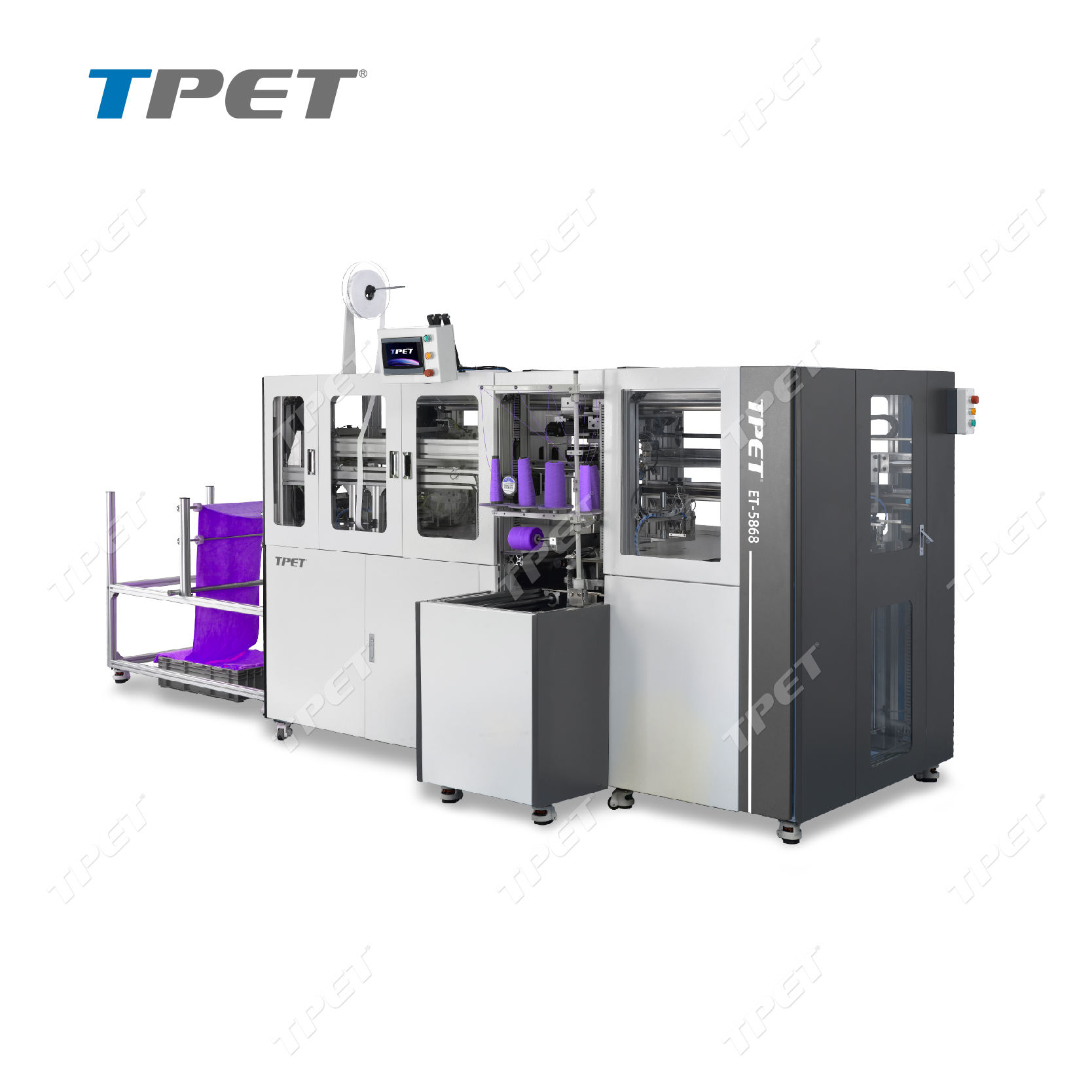
High-quality stitching is critical for microfiber towels because cleaning products undergo frequent washing and heavy use. Poor stitching can lead to edge damage, thread breakage, and reduced product lifespan.
Specialized sewing machines ensure:
Strong seams
Uniform stitching
Better durability
Professional appearance
This helps manufacturers build a strong reputation in the market.
Automation and high-speed operation allow manufacturers to produce large quantities of towels in less time. Increased efficiency helps companies meet tight delivery schedules and reduce manufacturing costs.
For export-oriented manufacturers, faster production directly improves competitiveness.
Modern sewing systems reduce the need for extensive manual labor. Automatic functions such as thread trimming, edge folding, and programmable stitching reduce operator workload.
As labor costs continue to rise globally, automation provides significant long-term benefits for textile manufacturers.
Accurate sewing technology minimizes production defects and material waste. Reduced waste helps manufacturers save costs and improve profitability.
Efficient material usage is especially important when working with premium microfiber fabrics.
Consistency is essential for large-scale orders and international clients. Specialized sewing machines maintain stable stitch quality across high-volume production runs.
This ensures every towel meets customer specifications and quality standards.
The automotive detailing industry heavily relies on microfiber towels for polishing, waxing, drying, and interior cleaning. High-quality edge stitching prevents scratches on vehicle surfaces and ensures durability during repeated washing.
Manufacturers producing automotive microfiber towels require precise sewing solutions to maintain product quality.
Consumers increasingly prefer reusable microfiber cloths for kitchen cleaning, bathroom cleaning, and dust removal. Specialized sewing machines enable mass production of durable household cleaning textiles.
Professional janitorial companies use microfiber towels extensively because they are more effective and hygienic than traditional cleaning cloths. Durable stitching is essential for long-term commercial use.
Hospitals and healthcare facilities require high-quality microfiber cleaning products that can withstand frequent sterilization and washing. Strong seam construction improves product longevity and hygiene performance.
Factories, workshops, and manufacturing facilities use microfiber cloths for equipment cleaning and maintenance. Industrial applications demand heavy-duty sewing quality and durable construction.
Automation is reshaping the textile industry, and microfiber towel production is no exception. Smart sewing machines equipped with digital controls and automated systems allow manufacturers to improve efficiency while maintaining consistent quality.
Modern automated sewing solutions may include:
Automatic edge folding
Computerized pattern control
Automatic material feeding
Sensor-based thread monitoring
Real-time production tracking
Selecting the right sewing machine depends on several factors, including production scale, towel type, material thickness, and automation requirements.
Key considerations include:
Manufacturers should choose machines that match their daily production targets. High-volume factories benefit from fully automated systems.
Different towel designs require different stitching methods. Companies should select machines that support the required sewing styles.
Industrial sewing machines must operate continuously under demanding conditions. Durable machine construction ensures long-term reliability.
Easy maintenance reduces downtime and improves operational efficiency.
Reliable supplier support and spare parts availability are essential for long-term production stability.
As a professional manufacturer in the textile and sewing equipment industry, TPET understands the importance of quality, efficiency, and innovation. Advanced microfiber towel sewing machines enable manufacturers to meet evolving market demands while maintaining competitive production costs.
By investing in specialized sewing technology, TPET helps customers achieve:
Higher productivity
Superior product quality
Reduced operational costs
Improved manufacturing consistency
Enhanced market competitiveness
With the growing global demand for microfiber cleaning products, advanced sewing equipment will continue to play a vital role in the success of textile manufacturers worldwide.
Microfiber towels have become an essential product in the modern cleaning industry, creating strong demand for efficient and reliable manufacturing equipment. Specialized microfiber towel sewing machines are designed to address the unique challenges of microfiber fabric production while improving speed, precision, durability, and automation.
For manufacturers seeking to improve quality and production efficiency, investing in advanced sewing technology is no longer optional — it is a strategic necessity. From automotive detailing towels to industrial cleaning cloths, specialized sewing machines ensure consistent product performance and long-term durability.
As automation and smart manufacturing continue to evolve, the future of microfiber towel production will become even more efficient, sustainable, and technologically advanced. Companies like TPET are well-positioned to support this transformation by providing innovative sewing solutions tailored to the cleaning industry’s growing needs.

The TPET ET-6620 Automatic Pillow Cover Machine (US Type) is a high-efficiency, intelligent solution designed to revolutionize the production of American-style pillowcases, tailored to meet the demands of modern textile manufacturing. Built for speed...

The TPET ET-5816/GG 2nd Generation Automatic Terry Towel Length Hemming Machine is a state-of-the-art solution designed to revolutionize towel production efficiency and quality. As the main drafting unit of the industry standard “Automatic towe...

The ET-6628 Envelope Pillow Case Machine: A Milestone in Automated AB-Side Envelop Production From TPET Company.In the competitive landscape of modern textile manufacturing, efficiency, precision, and versatility are paramount. The ET-6628 Envelope P...

Equipped with advanced magnetic navigation technology, the autonomous vehicle ensures accurate path following and stable operation.

This automatic delivery vehicle is equipped with magnetic navigation technology and is designed for seamless integration with production lines.

 EN
EN