Blankets are essential textile products used in homes, hotels, hospitals, and commercial environments worldwide. From soft fleece throws to thick quilted comforters and wool blankets, the demand for high-quality blankets continues to grow across both small businesses and large-scale textile factories. As production standards increase, manufacturers must rely on reliable sewing equipment capable of handling thick fabrics and long production hours efficiently, making a durable sewing machine for blanket production an essential investment.
Choosing the right heavy-duty sewing machine plays a critical role in blanket manufacturing. Unlike ordinary sewing projects, blanket production involves working with bulky materials, multiple fabric layers, dense batting, and thick threads. Standard household sewing machines often struggle with these requirements, leading to skipped stitches, uneven seams, motor overheating, and reduced productivity. Whether you operate a small workshop or a large textile factory, understanding the right equipment can significantly improve production efficiency and product quality.
A heavy-duty sewing machine is specifically designed to sew thick, dense, or multi-layer fabrics continuously without performance issues. These machines feature stronger motors, reinforced internal components, durable metal frames, and advanced feeding systems that allow them to handle demanding sewing applications.
The main difference between household sewing machines and industrial heavy-duty machines lies in durability and performance. Household machines are typically designed for light fabrics and occasional use. While they may work for simple repairs or hobby sewing, they are not built for continuous operation or thick textile applications like blanket manufacturing.
Industrial heavy-duty sewing machines are engineered for long operating hours, high-speed performance, and precision stitching under demanding conditions. They can handle heavy materials consistently while maintaining stitch quality and minimizing downtime.
In blanket manufacturing environments, heavy-duty machines are especially important because they provide:
Higher sewing speed
Better stitch consistency
Improved durability
Reduced operator fatigue
Lower maintenance frequency
Greater production efficiency
For businesses focused on commercial blanket production, investing in industrial-grade sewing equipment is essential for maintaining competitiveness and product quality.
Since blankets are typically made from thick, layered, and soft materials, manufacturers need machines that can handle high sewing loads without compromising stitch accuracy or durability.
A powerful motor is essential for sewing thick blanket materials such as fleece, wool, and multi-layer quilt fabrics. Blanket production requires strong needle penetration force, especially when sewing through dense seams and padding. Machines with high-torque motors can maintain stable sewing speed without slowing down or overheating during long production hours.
Strong motor performance helps improve stitch consistency and overall production efficiency. It reduces skipped stitches, supports smoother sewing on heavy fabrics, and allows operators to adjust speed more easily for detailed sewing areas or straight high-speed stitching.
Heavy-duty sewing machines for blankets are typically built with full metal frames to provide greater stability during operation. Thick blanket fabrics can create strong vibration while sewing, and a durable metal structure helps keep the machine balanced and accurate at high speeds.
Metal-frame machines also offer a much longer service life compared to lightweight household models. Their durable construction reduces maintenance problems, minimizes production downtime, and ensures reliable performance during continuous industrial use.
Blanket materials are often soft, thick, and layered, making smooth fabric feeding more difficult. Standard feed systems may cause the top and bottom layers to shift unevenly, leading to puckering or distorted seams during sewing.
A walking foot or compound feed system moves multiple fabric layers evenly through the machine. This improves fabric control, reduces slippage, and helps produce cleaner, more consistent seams, especially for quilted blankets and padded materials.
Blanket manufacturing usually requires large industrial needles and heavy-duty thread such as polyester or nylon. Standard sewing machines may struggle to handle thick thread sizes and dense materials effectively, resulting in broken needles or weak seams.
Heavy-duty sewing machines are designed for high-tension sewing conditions and strong fabric penetration. This allows manufacturers to create durable seams that can withstand repeated washing, stretching, and long-term commercial use.
Different blanket styles require different stitch lengths depending on the fabric thickness and sewing purpose. Longer stitches are commonly used for thick materials and faster production, while shorter stitches provide stronger reinforcement and cleaner edge finishing.
An adjustable stitch length system gives operators greater flexibility during production. It improves sewing precision, enhances product appearance, and helps manufacturers adapt the machine for various blanket designs and material types.
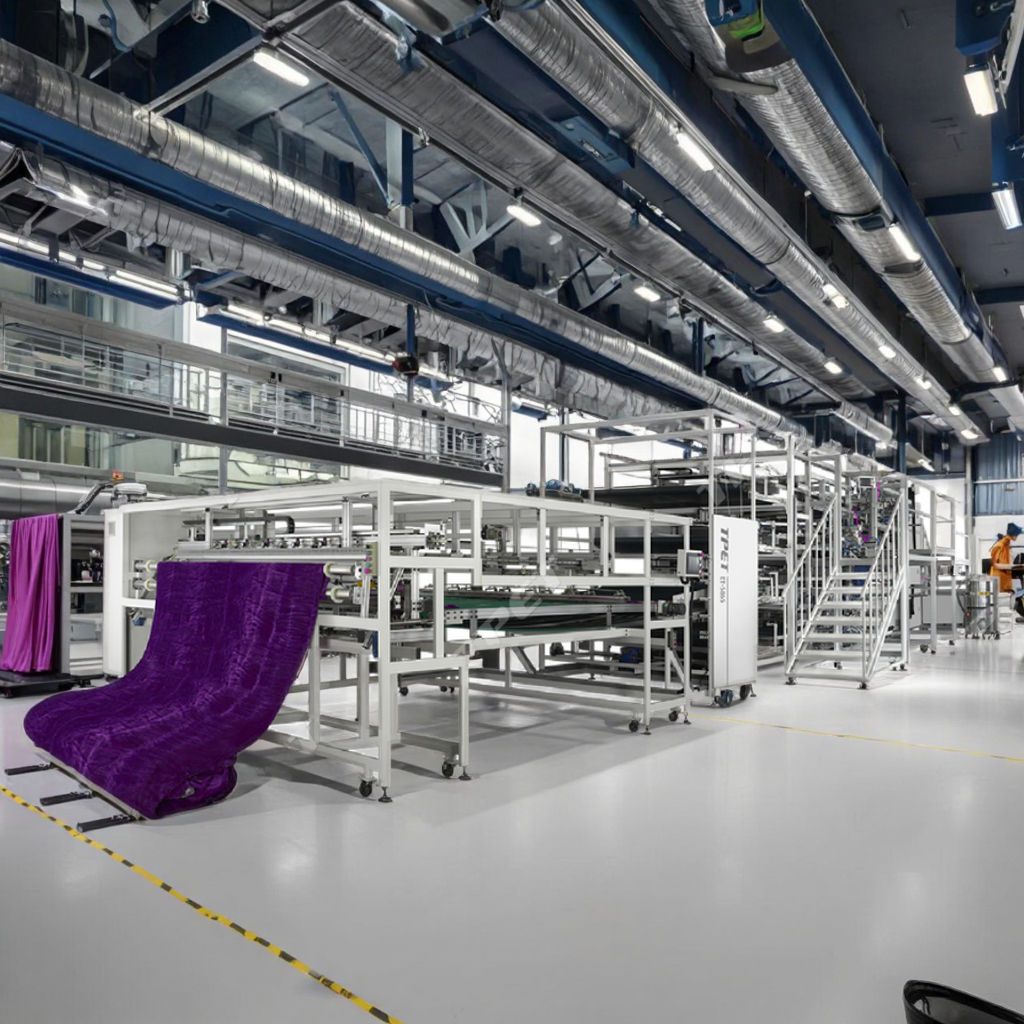
Different types of heavy-duty sewing machines are used in blanket manufacturing depending on the material thickness, sewing requirements, and production scale.
Industrial straight stitch machines are widely used for basic seam construction and high-speed blanket production. They provide stable stitching performance, excellent seam consistency, and high production efficiency, making them ideal for large-scale manufacturing environments.
These machines work well for standard blanket assembly where simple straight seams are required. However, when sewing very thick or layered blankets, additional feeding systems may sometimes be needed to improve fabric handling and sewing accuracy.
Walking foot sewing machines are highly suitable for quilted blankets and thick layered materials. Their synchronized feeding system helps move all fabric layers evenly, reducing slipping, puckering, and uneven stitching during sewing.
These machines are commonly used for quilts, fleece blankets, sherpa fabrics, and padded comforters. Their improved fabric control helps produce cleaner seams and better alignment, making them popular in both industrial blanket factories and professional quilting businesses.
Upholstery sewing machines are designed for sewing extremely heavy and bulky materials. Their strong motors and reinforced construction allow them to handle thick wool blankets, insulated fabrics, padded materials, and dense microfiber textiles with ease.
These machines are ideal for blanket products that require extra seam strength and long-term durability. Because of their heavy-duty design, upholstery machines can maintain stable performance during continuous industrial operation and demanding production conditions.
Overlock machines, also called sergers, are mainly used for blanket edge finishing. Since blanket edges experience frequent friction and repeated washing, proper edge reinforcement is important for improving durability and preventing fabric damage.
Serger machines help create clean edges, reduce fraying, and improve the overall appearance of the finished blanket. Many manufacturers combine overlock machines with straight stitch machines to achieve stronger seams and more professional finishing quality, especially in fleece and microfiber blanket production.
Selecting the right heavy-duty sewing machine is an important decision for blanket manufacturers. Different production environments have different sewing requirements, material types, and budget limitations. Therefore, businesses must carefully evaluate their operational needs before investing.
Production scale plays a major role in determining the most suitable sewing machine for blankets. Small workshops often focus on versatility and affordability, while large factories require high-speed machines capable of continuous industrial operation and maximum efficiency.
For low-volume production, semi-industrial machines may be sufficient for daily sewing needs. However, mass production environments usually require fully industrial heavy-duty machines that can maintain stable performance during long working hours and high-output manufacturing.
Different blanket materials require different sewing capabilities and machine specifications. Lightweight cotton blankets may only need basic sewing power, while thick wool, quilted fabrics, and sherpa materials require stronger motors and advanced feeding systems.
Manufacturers should evaluate all fabric types used in production, including fleece, microfiber, wool, and padded materials. The ideal sewing machine should be capable of handling the thickest and most demanding materials without reducing stitch quality or sewing efficiency.
Heavy-duty industrial sewing machines can require a significant initial investment. However, low-cost machines may lead to slower production, more frequent repairs, and reduced product quality, which can increase long-term operating costs.
Businesses should focus on long-term return on investment rather than only the purchase price. High-quality industrial machines usually provide better durability, faster production speed, improved reliability, and reduced downtime, helping manufacturers increase profitability over time.
Regular maintenance is essential for maintaining sewing quality and extending machine lifespan. Before purchasing a machine, manufacturers should consider the availability of spare parts, technical support, and local maintenance services.
Machines with accessible replacement parts and reliable after-sales support can help minimize production interruptions and repair delays. Strong technical support is especially important for industrial blanket factories that rely on continuous production efficiency.
Some industrial sewing machines are easier to operate, while others require experienced operators and technical training. Businesses should select machines that match the skill level of their workforce to ensure smooth daily operation and stable sewing quality.
User-friendly controls, adjustable settings, and automated features can help reduce training time and improve productivity. Even with advanced machines, proper operator training remains important for achieving consistent sewing performance and reducing production errors.
Selecting the best heavy-duty sewing machine for blanket making depends on several important factors, including fabric type, production volume, budget, and desired product quality. Blanket manufacturing requires equipment capable of handling thick materials, multiple fabric layers, and continuous operation without compromising stitch consistency.
For businesses involved in blanket manufacturing, investing in reliable heavy-duty sewing equipment is essential for maintaining competitiveness in today’s textile market. Whether operating a small handmade blanket business or a large industrial factory, the right machine can improve production quality, reduce downtime, and increase profitability over the long term.
TPET focuses on delivering durable and high-efficiency sewing machines designed specifically for modern textile manufacturing needs. Our heavy-duty sewing machines are engineered to handle demanding blanket production with ease, helping manufacturers achieve significantly higher productivity, consistent stitching quality, and reliable long-term performance. By choosing TPET equipment, businesses gain a dependable solution that enhances output while maintaining superior blanket craftsmanship.

The TPET ET-6620 Automatic Pillow Cover Machine (US Type) is a high-efficiency, intelligent solution designed to revolutionize the production of American-style pillowcases, tailored to meet the demands of modern textile manufacturing. Built for speed...

The TPET ET-5816/GG 2nd Generation Automatic Terry Towel Length Hemming Machine is a state-of-the-art solution designed to revolutionize towel production efficiency and quality. As the main drafting unit of the industry standard “Automatic towe...

The ET-6628 Envelope Pillow Case Machine: A Milestone in Automated AB-Side Envelop Production From TPET Company.In the competitive landscape of modern textile manufacturing, efficiency, precision, and versatility are paramount. The ET-6628 Envelope P...

Equipped with advanced magnetic navigation technology, the autonomous vehicle ensures accurate path following and stable operation.

This automatic delivery vehicle is equipped with magnetic navigation technology and is designed for seamless integration with production lines.

 EN
EN