EN
EN
In modern industrial logistics and bulk material handling, woven bags have become one of the most reliable packaging solutions. Industries such as agriculture, chemicals, construction, and food processing rely heavily on durable woven sacks for storing and transporting products like grains, fertilizers, cement, and animal feed. To ensure these bags are sealed securely and efficiently, manufacturers depend on advanced woven bag stitching machines.
For companies aiming to increase production efficiency and maintain consistent packaging quality, investing in a high-performance machine is essential. TPET provides professional industrial equipment designed to automate bag sewing processes while improving reliability and productivity on the production line.
The Growing Demand for Woven Bag Packaging
Woven polypropylene (PP) bags are widely used because of their strength, flexibility, and resistance to tearing. Compared with traditional packaging materials, woven bags offer superior load capacity and can withstand demanding transport conditions.
However, the effectiveness of these bags largely depends on how well they are sealed. Manual stitching methods are time-consuming, inconsistent, and prone to human error. As production volumes increase, factories require automated solutions that can handle continuous operation without sacrificing seam quality. This is where woven bag stitching machines play a critical role. These machines automate the process of sewing the top of filled bags, ensuring a strong, uniform seal that protects the contents during storage and transportation.
What Is a Woven Bag Stitching Machine ?
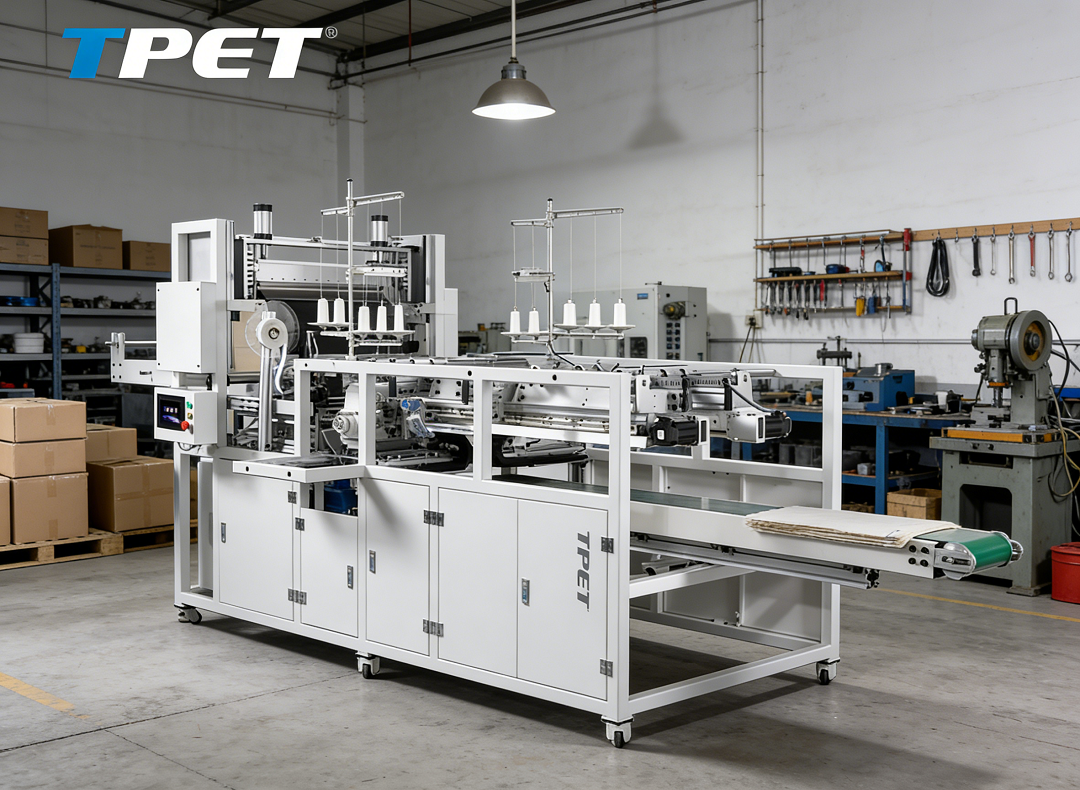
A woven bag stitching machine is an industrial device designed to sew the openings of filled woven sacks using high-strength thread. It is commonly installed at the end of packaging lines where bags are filled and prepared for shipment.
The machine typically consists of several key components:
A high-speed sewing head
Bag guiding and feeding system
Conveyor belt integration
Automatic thread cutting mechanism
Control panel for speed and operation settings
Together, these components allow the machine to stitch hundreds or even thousands of bags per hour with consistent seam quality. Modern machines, such as those developed by TPET, are engineered for continuous operation in demanding manufacturing environments.
Key Benefits of Using a Woven Bag Stitching Machine
Improved Production Efficiency
Automation significantly increases packaging speed compared with manual stitching. Industrial machines can process a large volume of bags per hour, allowing factories to meet high production demands without expanding their workforce. This efficiency is especially valuable in industries like agriculture and construction where bulk packaging is common.
Consistent Stitch Quality
Uniform stitching ensures that every bag is securely sealed. High-quality seams prevent product leakage, contamination, and accidental opening during transportation. A reliable machine maintains consistent stitch density and thread tension, ensuring every bag meets the same quality standards.
Reduced Labor Costs
Manual sewing operations require multiple workers and constant supervision. Automated stitching machines reduce the need for manual labor, lowering operating costs while maintaining high productivity. Workers can instead focus on monitoring the production line and handling quality control tasks.
Compatibility with Automated Production Lines
Many modern woven bag stitching machines are designed to integrate with automatic bagging systems, conveyors, and filling machines. This seamless integration allows manufacturers to build fully automated packaging lines that operate with minimal human intervention.
Durable and Reliable Operation
Industrial environments require equipment that can operate continuously without frequent breakdowns. High-quality machines are built with heavy-duty components, ensuring long service life even under demanding conditions. TPET machines are engineered to deliver stable performance and minimal downtime.
Applications Across Multiple Industries
Woven bag stitching machines are widely used in industries that require bulk packaging. Their ability to create secure and durable bag closures makes them indispensable in large-scale manufacturing.
Agriculture
Farmers and agricultural processors rely on woven sacks for packaging grains, rice, corn, seeds, and animal feed. Strong stitching prevents product loss during transport and storage.
Chemical Industry
Powdered and granular chemicals are often packaged in woven bags. Secure sealing is essential to prevent contamination and ensure safe handling.
Construction Materials
Materials such as cement, sand, and gypsum are commonly packed in woven sacks. Reliable stitching ensures that heavy loads remain securely contained.
Food Processing
Many food products—including flour, sugar, and starch—are packaged in woven polypropylene bags. Proper sealing protects products from moisture and contamination.
Features of Advanced TPET Woven Bag Stitching Machines
TPET focuses on developing industrial packaging equipment that combines precision engineering with user-friendly operation. Their woven bag stitching machines are designed to meet the demands of modern manufacturing facilities.
Key features include:
High-Speed Sewing Performance
Advanced sewing heads enable fast and precise stitching, supporting high-volume production.
Adjustable Stitch Settings
Operators can adjust stitch length, sewing speed, and thread tension to accommodate different bag materials and thicknesses.
Automatic Thread Cutting
Many machines include automatic cutting systems that trim threads after each seam, improving efficiency and maintaining clean bag closures.
Stable Mechanical Structure
Heavy-duty frames ensure vibration-free operation and long-term durability.
Easy Maintenance
Accessible components and simplified mechanical design allow quick maintenance and reduced downtime. These features make TPET machines suitable for continuous industrial use.
Choosing the Right Woven Bag Stitching Machine
Selecting the appropriate machine depends on several factors related to production requirements and packaging specifications.
Production Capacity
Factories with high output demand machines capable of high-speed operation and continuous stitching.
Bag Material and Thickness
Different woven materials may require specific needle types, thread strength, and stitch settings.
Automation Level
Some manufacturers require standalone machines, while others prefer systems integrated with conveyors and automatic bagging lines.
Maintenance and Reliability
Reliable equipment with low maintenance requirements helps reduce operational costs over time. Working with an experienced equipment manufacturer such as TPET ensures that the machine configuration matches your specific production needs.
The Future of Automated Industrial Packaging
As industries continue to modernize their manufacturing processes, automation will play an increasingly important role in packaging operations. Smart manufacturing systems are gradually integrating sensors, intelligent control systems, and real-time monitoring to optimize performance.
Woven bag stitching machines are also evolving. Future developments may include:
IoT-enabled machine monitoring
Predictive maintenance systems
Automated quality inspection
Fully integrated packaging lines
These innovations will further improve efficiency and reduce operational costs across industries. TPET continues to invest in technological development to support manufacturers in building smarter and more efficient production lines.
Conclusion
Woven bag packaging remains one of the most practical solutions for transporting bulk materials across multiple industries. However, the effectiveness of these bags depends heavily on reliable sealing.A high-quality woven bag stitching machine ensures strong seams, improved efficiency, and consistent packaging quality. By automating the stitching process, manufacturers can increase productivity, reduce labor costs, and maintain reliable packaging standards.
With advanced engineering and industrial reliability, TPET woven bag stitching machines provide a dependable solution for modern packaging operations. As industries move toward greater automation, these machines will remain a critical component in efficient and secure bulk packaging systems.