Manufacturing rugs and mats is an exercise in managing extreme density. Unlike a standard garment, a rug combines a thick pile, a rigid backing (often jute or latex), and frequently, a high-friction surface. In 2026, the demand for custom area rugs and high-performance car mats has driven a surge in specialized Heavy-Duty Sewing Machines designed to conquer these "textile mountains."
Whether you are binding the edges of a plush wool rug or serging a durable polypropylene outdoor mat, your success depends on three factors: torque, clearance, and feed consistency.
A standard drop-feed machine (where only the bottom teeth move) is useless for rugs. The sheer weight of the material would cause the top layer to slip, leading to "puckering" and uneven edges.
The Walking Foot: This is the gold standard for rug production. The presser foot is split into two parts: an inner foot that holds the material and an outer foot that "walks" across the top. This ensures that the top and bottom layers move in perfect synchronization.
Compound Feed: In 2026, top-tier machines from brands like TEPT and Consew utilize a triple-feed system—the needle, the feed dog, and the presser foot all move together to pull the rug through the machine. This provides the immense grip needed for heavy latex-backed mats.
Depending on the final look of the rug, you will need one of two specialized machine types:
Binding involves wrapping a separate piece of tape (usually cotton, polyester, or leather) around the raw edge of the rug.
Puller Systems: Because rugs are heavy, binding machines are often equipped with a rear power puller. This motorized roller helps pull the finished rug away from the needle, preventing the operator from having to manually drag a 50lb rug through the machine.
Folder Attachments: These attachments guide the binding tape, folding it perfectly over the edge just before the needle strikes.
Serging (or overlocking) creates a decorative, braided edge using only thread.
Heavy-Duty Loopers: A rug serger uses much thicker thread than a garment serger. The loopers are made of hardened steel to withstand the constant abrasion of wool and synthetic fibers.
High-Clearance Knives: These machines feature oversized knives that trim the excess rug backing and pile simultaneously, creating a flush surface for the thread to encase.
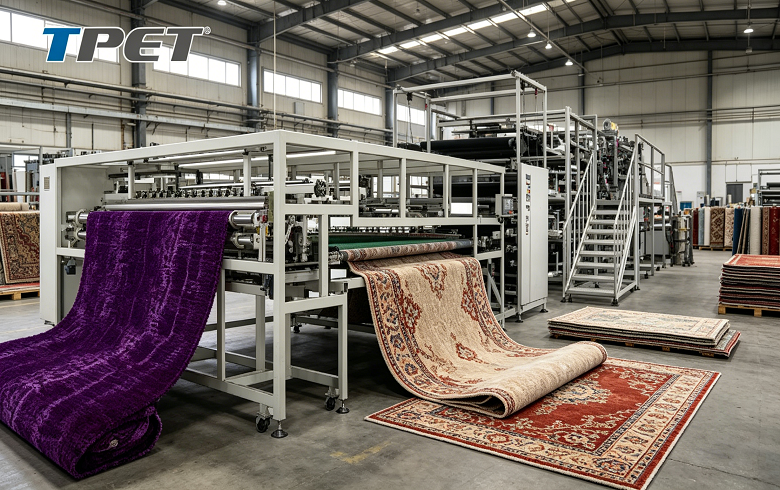
When selecting a machine for a heavy-duty line, these specs are non-negotiable:
| Feature | Requirement for Rugs/Mats | Why It Matters |
| Needle System | 135x17 or 190R | Thicker, longer needles that won't snap when hitting rigid backings. |
| Foot Lift | 16mm to 20mm | High clearance is required to fit thick pile rugs under the foot. |
| Motor Type | 750W - 1000W Servo | Provides high torque at low speeds for precise cornering on heavy mats. |
| Stitch Length | Up to 10mm | Longer stitches are stronger and look more proportional on large area rugs. |
2026 has seen a trend toward Recycled Polymer Mats and High-Density EVA Foam mats. These materials are "grabby" and can melt if the needle gets too hot.
Teflon-Coated Parts: To prevent the rubber backing from sticking to the machine, 2026 industrial models use Teflon-coated throat plates and presser feet.
Needle Coolers: High-speed sewing through rubber creates immense heat. Pneumatic needle coolers use a constant stream of air to prevent the thread from melting and the needle from losing its temper.
Rug manufacturing is perhaps the "dustiest" sector in textiles. Wool fibers and latex dust can settle into the machine’s oil reservoir, creating a sludge that destroys internal gears.
Daily Blow-Outs: Use high-pressure compressed air every 4 hours of operation to clear the hook assembly.
Magnetic Oil Filters: Modern TEPT machines include magnetic filters in the oil pan to catch microscopic metal shavings and debris before they circulate back into the bearings.
Knife Sharpening: Rug serger knives dull quickly due to the abrasive nature of jute backings. A daily "honing" of the blades is required for a clean edge.
For large area rugs, the "Long Arm" machine is the trend of 2026. With a throat space of 20 to 30 inches, these machines allow the operator to roll up a large rug and pass it through the machine without constantly repositioning the fabric. Combined with Automatic Thread Trimmers (UBT), these units can increase a factory's output by 35%.
The Professional Edge: For the highest quality finish, always use a "Slow-Start" setting on your servo motor. This allows the needle to gain momentum before hitting a thick "dobby" border, preventing needle deflection and skipped stitches.
A heavy-duty sewing machine for rugs is more than just a tool; it is a specialized piece of industrial equipment that must balance brute force with fine precision. By focusing on triple-feed systems, high foot clearance, and robust maintenance, manufacturers can ensure their rugs stay beautiful and intact from the showroom floor to the customer's home.
Whether you are finishing the delicate fringe of a Persian-style rug or the rugged edge of an all-weather car mat, the right machine makes the impossible seam easy.

The TPET ET-6620 Automatic Pillow Cover Machine (US Type) is a high-efficiency, intelligent solution designed to revolutionize the production of American-style pillowcases, tailored to meet the demands of modern textile manufacturing. Built for speed...

The TPET ET-5816/GG 2nd Generation Automatic Terry Towel Length Hemming Machine is a state-of-the-art solution designed to revolutionize towel production efficiency and quality. As the main drafting unit of the industry standard “Automatic towe...

The ET-6628 Envelope Pillow Case Machine: A Milestone in Automated AB-Side Envelop Production From TPET Company.In the competitive landscape of modern textile manufacturing, efficiency, precision, and versatility are paramount. The ET-6628 Envelope P...

Equipped with advanced magnetic navigation technology, the autonomous vehicle ensures accurate path following and stable operation.

This automatic delivery vehicle is equipped with magnetic navigation technology and is designed for seamless integration with production lines.

 EN
EN