A double chain stitch sewing machine produces an ISO 401 stitch, also called a two-thread double-locked chainstitch. Unlike a lockstitch, which interlocks top thread with bobbin thread inside the fabric, the chainstitch loops the needle thread through its own previous loop on the underside, with a looper thread running through that loop to lock it. No bobbin is involved. This means the stitch has built-in stretch tolerance because the interlaced loops can elongate under tension without breaking. That property alone makes the double chain stitch the default choice for knitwear side seams, where a rigid lockstitch would snap as soon as the wearer stretches an arm forward or bends at the waist.
A practical point often overlooked: the chainstitch unravels if the final stitch is pulled backward, but only from the end of the seam in the reverse direction of stitching. Production lines manage this by back-tacking or overlapping the seam start and finish by 10mm to 15mm, a simple habit that eliminates the issue at the output end.
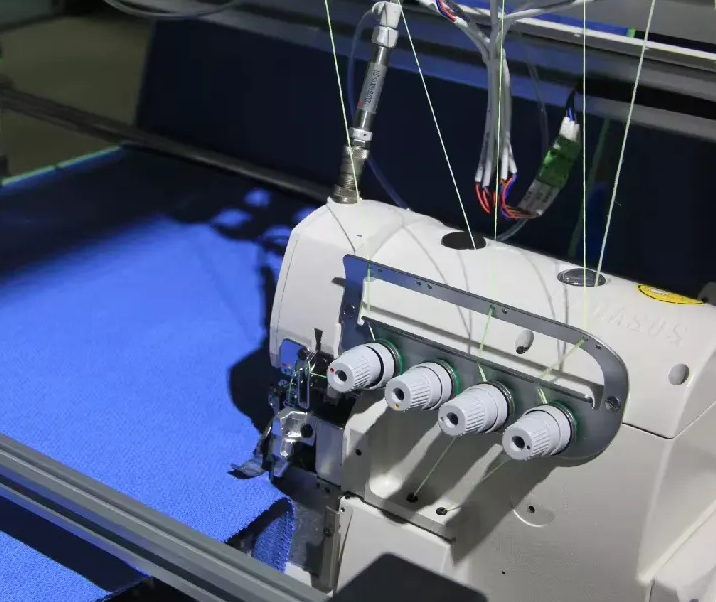
Watching the stitch form in slow motion reveals why timing matters so much. The needle descends through the fabric and begins its upward stroke, leaving a small loop of thread on the underside. The looper, traveling on an elliptical path, passes through this needle-thread loop at precisely the right millisecond. As the looper retracts, it carries its own looper thread through the needle loop. On the next needle descent, the needle enters the looper thread triangle, and the cycle repeats, each new stitch locking the previous one. If the looper timing is off by more than 2 degrees of rotation, skipped stitches appear immediately. The tolerance window is tight, and machines running double chainstitch at 5,000 SPM push that tolerance to the mechanical limit of the looper drive cam and linkage assembly.
Athletic wear sewn with a lockstitch develops popped seams within the first few wear cycles because the stitch simply cannot keep up with the fabric elongation. A double chain stitch sewing machine solves this by allowing the stitch to extend roughly 30% before thread tension rises to the breaking point, matching the stretch behavior of cotton-spandex and polyester-elastane blends. T-shirt side seams, underwear gussets, and yoga-pant inseams all rely on this stitch class. A sportswear contract manufacturer in Guangxi switched a toddler legging line from lockstitch to double chainstitch for the inseam and crotch assembly, reducing field seam returns by more than 60% across two seasons, according to internal QC records shared with fabric suppliers in 2024.
Another configuration derived from the double chain stitch is the flatlock or coverstitch, where multiple needle threads interloop with a looper thread to create a seam that sits flat against the skin with no raised ridge. This is the technology behind flat-seamed athletic tops and the soft, chafe-free inside of premium T-shirts. The same mechanism, when run with the fabric folded instead of butted, produces the parallel-row hem finish familiar on activewear sleeves and bottom bands. The flat seaming variant eliminates the bulky interior fold that traditional lockstitch hems create, which is why brands targeting sensory-sensitive consumers often specify flat-seam construction across their entire base-layer category.
| Stitch Property | Double Chainstitch (ISO 401) | Lockstitch (ISO 301) |
|---|---|---|
| Stretch Tolerance | Up to 30% elongation | Near zero |
| Bobbin Required | No (looper thread only) | Yes |
| Bobbin Change Frequency | Not applicable | Every 30 to 60 minutes at high speed |
| Seam Unravel Risk | From seam end if not secured | From any break point |
| Thread Consumption | Higher (interloop structure) | Lower |
| Best Applications | Knits, stretch, activewear | Wovens, topstitching, formalwear |
Double chain stitch machines handle everything from 80gsm single jersey to 400gsm fleece without major adjustment beyond feed-dog height and presser foot clearance. The stitch tolerates surface texture well, so loopback terry and French terry run smoothly where a lockstitch might catch and skip on the raised pile. The upper limit typically lands around 6mm of compressed thickness in a seam assembly; beyond that, looper travel distance becomes insufficient, and skipped stitches multiply. For heavy-duty applications involving multiple layers of denim or canvas above 12oz weight, a safety-stitch configuration combining chainstitch and overedge in a single pass offers better reliability without sacrificing seam security.
Maintenance discipline on a double chain stitch sewing machine matters more than on a lockstitch because the looper mechanism has tighter clearances and more moving elements in the thread path. Lint buildup around the looper race, a common problem in cotton-heavy production environments, alters the looper trajectory by fractions of a millimeter, enough to cause intermittent skip patterns that waste inspection hours tracking down. A compressed-air cleaning routine every 4 hours, combined with a weekly looper gap check using a feeler gauge, prevents most of these issues before they reach QC.
For factories that run knitwear, activewear, or any category where seam stretch is a production requirement rather than a nice-to-have, TPET supplies double chain stitch machines with hardened looper assemblies and direct-drive servo systems designed for consistent stitch formation across extended high-speed runs.

The TPET ET-6620 Automatic Pillow Cover Machine (US Type) is a high-efficiency, intelligent solution designed to revolutionize the production of American-style pillowcases, tailored to meet the demands of modern textile manufacturing. Built for speed...

The TPET ET-5816/GG 2nd Generation Automatic Terry Towel Length Hemming Machine is a state-of-the-art solution designed to revolutionize towel production efficiency and quality. As the main drafting unit of the industry standard “Automatic towe...

The ET-6628 Envelope Pillow Case Machine: A Milestone in Automated AB-Side Envelop Production From TPET Company.In the competitive landscape of modern textile manufacturing, efficiency, precision, and versatility are paramount. The ET-6628 Envelope P...

Equipped with advanced magnetic navigation technology, the autonomous vehicle ensures accurate path following and stable operation.

This automatic delivery vehicle is equipped with magnetic navigation technology and is designed for seamless integration with production lines.

 EN
EN