In the high-pressure environment of 2026 industrial bedding manufacturing, the integrity of a seam is the literal thread holding a brand’s reputation together. As factories scale up to meet global demand for heavy-duty duvets, intricate upholstery, and high-tension fitted sheets, the Double Needle Stitching Machine (also known as a twin-needle machine) has transitioned from a specialty tool to a production floor essential.
While a single-needle lockstitch provides a clean finish, it creates a single point of failure. If one thread snaps under the stress of a high-loft comforter, the entire seam can unravel. Double-needle technology eliminates this risk by distributing mechanical stress across two parallel rows of defense, doubling the seam's durability and visual appeal in a single pass.
The "secret" to the superior strength of a double-needle machine lies in its ability to create two independent, parallel lockstitches simultaneously.
Dual Reinforcement: By sewing two rows at once, the "pull" on the fabric is divided.
Uniform Stress Distribution: In items subjected to frequent washing and stretching—like mattress protectors and duvet covers—the parallel stitching ensures that the tension is shared equally across the fabric surface, significantly reducing the likelihood of seam "bursting."
Advanced Feed Systems: 2026 models, such as those from TEPT, often utilize unison-feed (walking foot) technology. This ensures all layers—the top fabric, batting, and backing—move at the exact same speed, preventing internal friction that weakens seams.
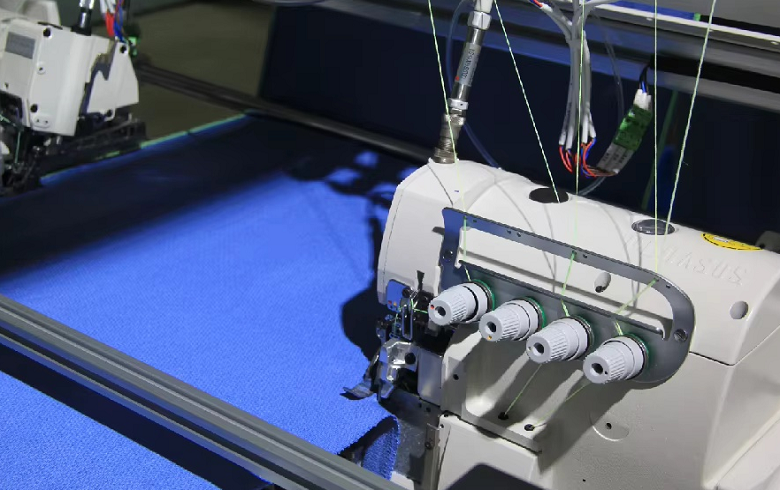
To maximize ROI, factory managers in 2026 prioritize machines that combine raw power with computerized precision.
One of the most significant advancements is the Organized Split Needle Bar. This allows the operator to disengage one needle while making sharp turns or sewing
Oil stains are a silent killer of factory margins. Modern industrial machines now feature semi-dry heads.
Double-needle sewing consumes thread at twice the normal rate. Modern industrial models come standard with large-capacity hooks (XXL bobbins), which reduce bobbin changes by 50%. This is critical for long, continuous seams on king-size bedspreads or industrial curtains.
When choosing a machine for your line, it is vital to understand the interaction between thread type and machine configuration.
| Feature | Single Needle Lockstitch | Double Needle Lockstitch | Double Needle Chainstitch |
| Seam Strength | Standard | High | Very High |
| Flexibility | Rigid | Stable | Elastic (High Stretch) |
| Top Application | Basic Seaming | Topstitching / Bedding | Knit / Jersey Linens |
| Productivity | 1.0x | 2.0x (Parallel Lines) | 2.0x (Parallel Lines) |
Because these machines carry twice the hardware, they require a disciplined maintenance regimen to stay at peak performance.
Needle Alignment: If the two needles are not perfectly aligned, the "loop" timing will be off, leading to skipped stitches on one side. In a 24/7 factory, needles should be replaced every 8–12 hours.
Tension Balancing: Both upper threads must be calibrated to identical tension levels. If one is tighter than the other, the seam will "tunnel" or pucker, creating a weak point that will likely fail in an industrial wash cycle.
Lint Management: Double needles generate twice the lint. Daily use of compressed air in the bobbin case and under the needle plate is mandatory to prevent the "gritty paste" that leads to motor overheating.
In 2026, the TEPT brand and other industry leaders have integrated double-needle machines into the IoT (Internet of Things) ecosystem.
Digital Tension "Recipes": Operators can select a pre-set profile for "Silk" or "Heavy Canvas" on a touch screen. The machine automatically adjusts the electronic tensioners for both needles.
Automatic Thread Trimmers: Integrated sensors detect the end of a fabric run and snip all four threads (two top, two bobbin) simultaneously, saving miles of thread per year.
Energy Efficiency: Modern direct-drive motors use approximately 60% less energy than older belt-driven models, helping factories meet modern sustainability mandates.
Transitioning to Double Needle Stitching Machines is an investment in quality. It provides the visual symmetry customers associate with luxury and the mechanical strength required for industrial longevity.

The TPET ET-6620 Automatic Pillow Cover Machine (US Type) is a high-efficiency, intelligent solution designed to revolutionize the production of American-style pillowcases, tailored to meet the demands of modern textile manufacturing. Built for speed...

The TPET ET-5816/GG 2nd Generation Automatic Terry Towel Length Hemming Machine is a state-of-the-art solution designed to revolutionize towel production efficiency and quality. As the main drafting unit of the industry standard “Automatic towe...

The ET-6628 Envelope Pillow Case Machine: A Milestone in Automated AB-Side Envelop Production From TPET Company.In the competitive landscape of modern textile manufacturing, efficiency, precision, and versatility are paramount. The ET-6628 Envelope P...

Equipped with advanced magnetic navigation technology, the autonomous vehicle ensures accurate path following and stable operation.

This automatic delivery vehicle is equipped with magnetic navigation technology and is designed for seamless integration with production lines.

 EN
EN