The global home textile market in 2026 is no longer defined solely by thread counts or color palettes. Instead, it is defined by the intelligence, sustainability, and agility of the machinery behind the scenes. As consumer expectations for "fast home fashion" collide with a global demand for ethical production, manufacturers are turning to a new generation of equipment to bridge the gap.
Leading this charge is TEPT, a brand that has become synonymous with the "Smart Factory" movement. From AI-driven stitch regulation to waterless finishing, the trends of 2026 are reshaping the factory floor. Here is how TEPT and the wider industry are modernizing home textile production.
For decades, the skill of a sewing machine operator was the primary variable in quality. In 2026, TEPT has introduced cognitive automation that assists the operator in real-time.
AI Vision Systems: Modern TEPT machines are equipped with high-speed cameras that scan the fabric 200 times per second. If the system detects a skipped stitch, a slight pucker, or an oil spot, it halts production instantly.
Self-Adjusting Tension: Different materials—like a heavy velvet curtain versus a delicate silk pillowcase—require vastly different tensions. TEPT’s 2026 lineup features "Material-Sense" technology, where the machine automatically adjusts the presser foot pressure and thread tension based on the resistance it feels at the needle bar.
This trend reduces the "learning curve" for new employees, allowing factories to maintain elite quality levels even amidst labor shortages.
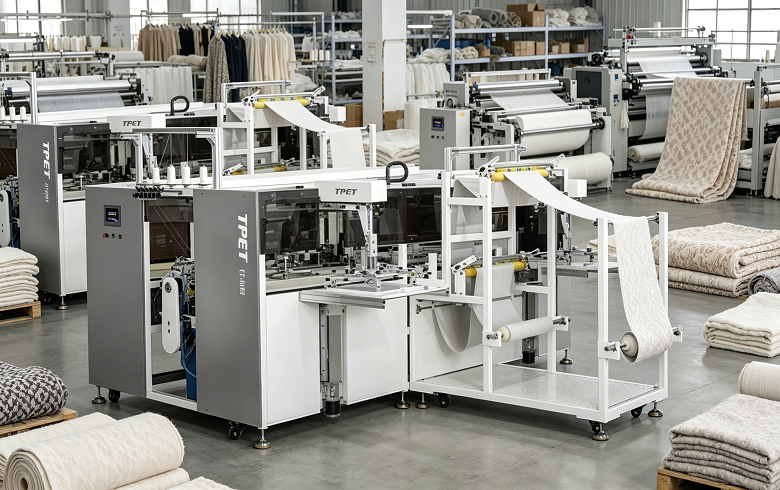
The 2026 consumer doesn't want the same duvet cover as their neighbor. They want "micro-batches" and personalized embroidery.
Traditional textile machines were designed for massive runs of 10,000 identical units. TEPT’s latest computerized systems allow for "Lot Size One" production. By integrating the factory's ERP (Enterprise Resource Planning) software directly with the machine, a TEPT quilting unit can switch from a King-sized geometric pattern to a Twin-sized floral pattern without the operator touching a single manual setting.
Designers can now upload CAD files to a secure cloud. A factory in one hemisphere can download and execute a design on a TEPT embroidery machine seconds after it is finalized in another. This "Digital Thread" eliminates the need for physical samples and mailing, cutting weeks off the product development cycle.
In 2026, environmental regulations have become strict. Machinery is now judged by its carbon footprint and resource efficiency.
Energy Recuperation: Much like a hybrid car, TEPT’s high-speed motors now feature kinetic energy recovery systems. The energy generated during the braking of the needle bar is fed back into the machine’s power supply, reducing total electricity consumption by up to 18%.
Waterless Finishing: Finishing is traditionally the most water-intensive part of textile production. New TEPT finishing modules utilize ozone and nano-bubble technology to apply antimicrobial and flame-retardant coatings, reducing water usage by 90% compared to traditional dip-tank methods.
Luxury bedding in 2026 is moving away from continuous lines toward the "tufted" look. TEPT has perfected the Advanced Tack & Jump functionality.
By using independent needle-actuation technology, TEPT machines can perform reinforced tacks in specific patterns while "jumping" over the fabric without leaving a trail of thread. This creates a loftier, more breathable comforter that mimics the look of hand-stitched artisan quilts but at an industrial speed of 3,000 RPM.
In the past, a broken gear meant a dead production line until a technician arrived. In 2026, TEPT machines are self-diagnosing.
Every TEPT machine now has a "Digital Twin"—a virtual model that lives in the factory's server. By comparing real-time sensor data to the virtual model, the system can predict when a motor bearing is 50 hours away from failure.
Automatic Ordering: The system can automatically order the replacement part from the TEPT service center.
Augmented Reality (AR) Repair: Local operators can wear AR glasses that overlay digital instructions onto the physical machine, allowing them to perform complex repairs with the guidance of a remote TEPT engineer.
Bedding is getting heavier and more complex, featuring weighted "gravity" blankets and phase-change (cooling) materials. Traditional feed systems often slip when handling these heavy loads.
TEPT has responded with the Synchronized Quad-Feed. This system uses four independent movement points (top, bottom, and sides) to ensure that even a 20lb weighted blanket moves through the sewing area with the same fluidity as a light cotton sheet. This prevents the "layer shifting" that previously led to high reject rates in the weighted-bedding segment.
The final trend for 2026 isn't just about the sewing; it's about the handling. TEPT has integrated collaborative robots into the end-of-line process.
Once a quilt exits the TEPT overlock station, a robotic arm—safe to work alongside humans without cages—folds, compresses, and vacuum-seals the product into its retail packaging. This reduces human contact, ensuring the product remains sterile and perfectly folded when it reaches the consumer's door.
As we look at the landscape of 2026, it is clear that the "home textile machine" has evolved into a sophisticated computer that happens to sew. Brands like TEPT are no longer just selling hardware; they are selling uptime, precision, and sustainability. For factory owners, modernizing with TEPT technology is the only way to meet the dual demands of the modern market: the desire for high-speed, low-cost production and the requirement for artisanal, high-quality results. The future of the home textile industry is smart, green, and incredibly fast.

The TPET ET-6620 Automatic Pillow Cover Machine (US Type) is a high-efficiency, intelligent solution designed to revolutionize the production of American-style pillowcases, tailored to meet the demands of modern textile manufacturing. Built for speed...

The TPET ET-5816/GG 2nd Generation Automatic Terry Towel Length Hemming Machine is a state-of-the-art solution designed to revolutionize towel production efficiency and quality. As the main drafting unit of the industry standard “Automatic towe...

The ET-6628 Envelope Pillow Case Machine: A Milestone in Automated AB-Side Envelop Production From TPET Company.In the competitive landscape of modern textile manufacturing, efficiency, precision, and versatility are paramount. The ET-6628 Envelope P...

Equipped with advanced magnetic navigation technology, the autonomous vehicle ensures accurate path following and stable operation.

This automatic delivery vehicle is equipped with magnetic navigation technology and is designed for seamless integration with production lines.

 EN
EN