A double needle lockstitch machine is a highly efficient industrial sewing machine widely used in garment manufacturing, upholstery, denim production, and decorative stitching. It produces two parallel stitch lines at the same time, making seams stronger, more precise, and visually appealing.
However, like all industrial equipment, it may experience operational issues during use. Understanding common problems and their causes is essential for maintaining stable productivity, minimizing downtime, and extending machine lifespan.
This guide focuses on the most frequent issues found in double needle lockstitch machines and provides practical troubleshooting methods to resolve them quickly and effectively, ensuring consistent stitching quality and reliable performance in daily production.
Before troubleshooting, it is important to understand how a double needle lockstitch machine works. It uses two needles and two upper threads that interlock with a single bobbin thread (or two bobbins, depending on the model) to create two parallel stitch lines in one operation, improving efficiency and consistency.
The stitch formation depends on the precise coordination of several key components. The needle bar drives both needles, the hook system catches and forms the stitches, the feed dogs move the fabric forward, and the tension discs control thread tightness. All these parts must work in perfect synchronization.
Because of this complexity, the machine is sensitive to even small errors. Minor misalignment, incorrect threading, or improper tension can easily cause defects such as skipped stitches, thread breakage, or uneven seams. Understanding these basics helps make troubleshooting more effective.
Thread breakage is one of the most frequent and frustrating problems operators encounter. It can occur in either the upper thread or bobbin thread and often leads to production delays and material waste.
Incorrect thread tension (too tight or uneven)
Poor-quality or unsuitable thread type
Damaged needle (bent, dull, or incorrect size)
Improper threading path
Burrs or sharp edges on needle plate or hook
Begin by rethreading the machine carefully, ensuring the thread passes through all guides and tension discs correctly. Even minor threading mistakes can cause instability.
Next, adjust thread tension gradually. Avoid making large changes at once, as this can create new imbalance issues.
Replace needles regularly and ensure they are suitable for the fabric and thread being used. A worn or incorrect needle can easily damage thread fibers during stitching.
Finally, inspect the needle plate and hook area. Even small burrs or scratches can cut the thread during operation. If damage is found, polish or replace the affected parts immediately.
Skipped stitches reduce seam strength and affect product appearance, making this issue critical in industrial sewing environments.
Incorrect needle-to-hook timing
Bent or dull needles
Improper needle installation (wrong direction or height)
Fabric thickness mismatch with needle size
Insufficient presser foot pressure
Ensure that needles are installed correctly with proper orientation. Double needle machines require precise alignment for both needles.
Replace needles if they show any signs of wear or bending. Even slight deformation can affect stitch formation.
Check hook timing carefully. If the hook does not meet the needle at the correct moment, skipped stitches will occur. This usually requires professional adjustment.
Adjust presser foot pressure depending on material type. Heavy fabrics like denim require stronger pressure, while lightweight fabrics require a softer setting for smooth feeding.
Uneven stitching or loose loops often indicate tension imbalance between upper and lower threads.
Incorrect thread tension settings
Improper threading
Uneven bobbin winding
Dirty tension discs
Inconsistent fabric feeding
Start by rechecking the entire threading path. Incorrect threading is one of the most common causes of stitch inconsistency.
Clean tension discs regularly using a soft brush or compressed air to remove lint and dust buildup.
Ensure bobbins are wound evenly and not overfilled. Irregular bobbin winding affects thread release during sewing.
Finally, check feed dog movement. If fabric is not feeding evenly, stitches will appear irregular regardless of tension settings.
Thread nesting occurs when excess thread accumulates under the fabric, forming tangled loops. This is a common startup issue in production lines.
Incorrect upper threading (especially tension disc engagement)
Starting sewing without holding thread tails
Incorrect tension settings
Damaged or misinstalled bobbin case
Always ensure the presser foot is raised during threading so the tension discs are fully open. This allows proper thread placement.
When starting a seam, hold both thread tails for the first few stitches to prevent tangling.
Inspect the bobbin case for dirt, lint, or damage. Clean it regularly and ensure it is correctly installed.
Needle breakage can interrupt production, damage fabric, and pose safety risks to operators.
Needle hitting presser foot or needle plate
Wrong needle size or type
Pulling or forcing fabric during sewing
Misaligned needles and hooks
Sewing over thick seams without adjustment
Always select the correct needle type based on fabric thickness and thread size. Using an incorrect needle significantly increases breakage risk.
Avoid pulling fabric through the machine. Instead, allow the feed dogs to guide it naturally.
Slow down when sewing over thick seams and adjust pressure if necessary.
Regularly inspect alignment between needles and hook system to ensure smooth operation.
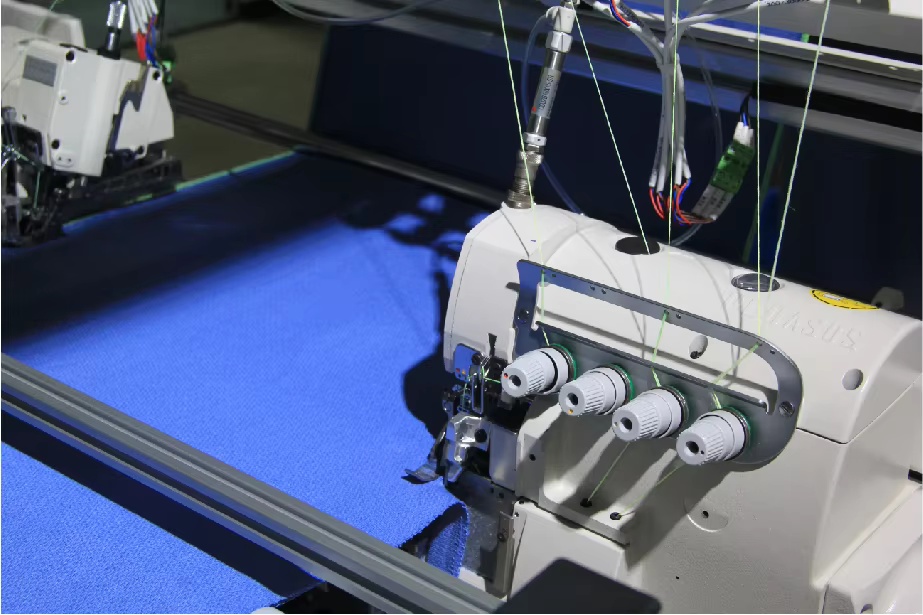
Fabric puckering refers to unwanted wrinkles or gathers along seam lines, affecting product appearance and quality.
Excessive thread tension
Incorrect stitch length
Mismatch between fabric and needle type
Uneven feed dog movement
Reduce upper thread tension and adjust stitch length according to fabric type. Lightweight fabrics typically require longer stitches and lower tension.
Use finer needles and threads for delicate materials to prevent distortion.
Ensure feed dogs move fabric evenly. Uneven feeding is a common cause of puckering in industrial machines.
For very delicate fabrics, stabilizers or backing materials can be used for additional support.
Unusual noise or vibration indicates mechanical issues that should be addressed immediately to prevent further damage.
Loose screws or components
Lack of lubrication
Worn bearings
Improper needle or presser foot installation
Regularly tighten all visible screws and inspect moving parts for looseness.
Lubricate the machine according to manufacturer recommendations using proper sewing machine oil.
Replace worn bearings or internal parts if noise persists.
Ensure the machine is placed on a stable and level surface to minimize vibration during operation.
In a double needle lockstitch machine, both stitch lines should be perfectly synchronized. If they differ, it indicates a mechanical or tension imbalance.
Uneven thread tension between needles
Feed dog misalignment
Timing issues
Unequal presser foot pressure
Balance thread tension for both needles individually.
Inspect feed dogs to ensure equal movement and consistent fabric feeding.
If mechanical timing is off, professional recalibration is required to restore synchronization.
Bobbin-related issues can lead to inconsistent stitching or complete machine failure.
Incorrect bobbin installation
Uneven winding
Dust or lint accumulation
Using incompatible bobbins
Always ensure bobbins match the machine specifications.
Wind bobbins evenly and avoid overfilling, as this can cause irregular thread release.
Clean bobbin cases regularly to prevent lint buildup that restricts movement.
Proper bobbin maintenance ensures stable lower thread performance.
If fabric does not feed properly, stitching becomes inconsistent or may stop entirely.
Worn feed dogs
Low presser foot pressure
Slippery or delicate fabric
Dust accumulation under throat plate
Clean feed dog area regularly to remove lint and debris.
Adjust presser foot pressure depending on fabric type.
For slippery materials such as silk or synthetic fabrics, use specialized presser feet or walking foot attachments.
Replace worn feed dogs if feeding issues persist.
Preventing issues is always more efficient than fixing them, especially with double needle lockstitch machines. Regular maintenance helps ensure stable performance, reduces unexpected downtime, and keeps the machine operating at optimal efficiency over the long term.
Clean the machine daily after use
Oil moving parts regularly
Replace needles frequently (every 8–10 hours of sewing)
Check thread quality before use
Store the machine in a dust-free environment
Schedule periodic professional servicing
Consistent maintenance reduces breakdowns, improves stitch quality, and extends machine lifespan, ensuring stable and reliable performance in daily production. Using durable, well-engineered machines such as those from TPET, combined with proper maintenance, further enhances long-term operational stability and consistent stitching quality.
A double needle lockstitch machine is a powerful tool in modern textile production, but it requires proper care and understanding to perform at its best. Common issues such as thread breakage, skipped stitches, uneven tension, and fabric puckering often occur during operation. However, most of these problems can be effectively resolved through systematic troubleshooting, correct machine settings, and regular maintenance.
By identifying symptoms early and applying the right adjustments, operators can greatly reduce downtime and ensure stable production efficiency. Routine cleaning, timely needle replacement, and proper threading also play a key role in performance. With consistent care and correct usage, a double needle lockstitch machine can deliver precise, durable, and high-quality stitching for long-term industrial use.

The TPET ET-6620 Automatic Pillow Cover Machine (US Type) is a high-efficiency, intelligent solution designed to revolutionize the production of American-style pillowcases, tailored to meet the demands of modern textile manufacturing. Built for speed...

The TPET ET-5816/GG 2nd Generation Automatic Terry Towel Length Hemming Machine is a state-of-the-art solution designed to revolutionize towel production efficiency and quality. As the main drafting unit of the industry standard “Automatic towe...

The ET-6628 Envelope Pillow Case Machine: A Milestone in Automated AB-Side Envelop Production From TPET Company.In the competitive landscape of modern textile manufacturing, efficiency, precision, and versatility are paramount. The ET-6628 Envelope P...

Equipped with advanced magnetic navigation technology, the autonomous vehicle ensures accurate path following and stable operation.

This automatic delivery vehicle is equipped with magnetic navigation technology and is designed for seamless integration with production lines.

 EN
EN