In textile manufacturing, efficiency and consistency are critical for maintaining productivity and meeting production targets. Towel production, in particular, requires specialized sewing machines capable of handling thick, absorbent fabrics like terry cloth. These machines operate at high speeds for extended periods, which makes regular maintenance essential. Proper towel sewing machine maintenance not only prevents unexpected downtime but also improves stitch quality, extends equipment lifespan, and reduces repair costs.
TPET Towel sewing machines are designed to handle heavy fabrics with dense loops and high moisture absorption properties. Terry cloth, the primary material used for towels, produces lint and fiber debris during sewing, which can accumulate inside the machine over time.
In addition, towel manufacturing often involves operations such as hemming, edge binding, and decorative stitching. These processes require machines to operate continuously at high speeds, placing additional strain on mechanical components like needles, loopers, feed dogs, and motors. Because of these demanding conditions, maintenance routines must be consistent and thorough. A well-maintained machine will operate more efficiently, produce cleaner stitches, and experience fewer mechanical failures.
Lint accumulation is one of the most common issues in towel sewing operations. The thick loops of terry fabric shed fibers that quickly gather inside the machine’s moving parts. Operators should perform basic cleaning tasks at the beginning or end of each shift. This includes removing lint from the needle plate, feed dogs, bobbin case, and thread guides. A small brush or compressed air can help remove debris from hard-to-reach areas.
Regular cleaning helps prevent problems such as:
Thread breakage
Uneven stitching
Overheating components
Increased mechanical wear
Keeping the machine clean ensures smoother operation and helps maintain consistent stitch quality.
Industrial towel sewing machines rely on numerous moving parts that must operate smoothly at high speeds. Without proper lubrication, friction can increase rapidly, leading to overheating, noise, and accelerated component wear. Manufacturers usually recommend a specific type of sewing machine oil designed for high-speed industrial equipment. Key areas that typically require lubrication include:
Needle bar mechanisms
Rotary hooks or loopers
Drive shafts and bearings
Feed mechanisms
Lubrication should follow the schedule recommended in the machine’s manual. In high-volume towel production lines, some machines require daily oiling to maintain peak performance. Proper lubrication reduces friction, ensures smoother stitching, and significantly extends the machine’s service life.
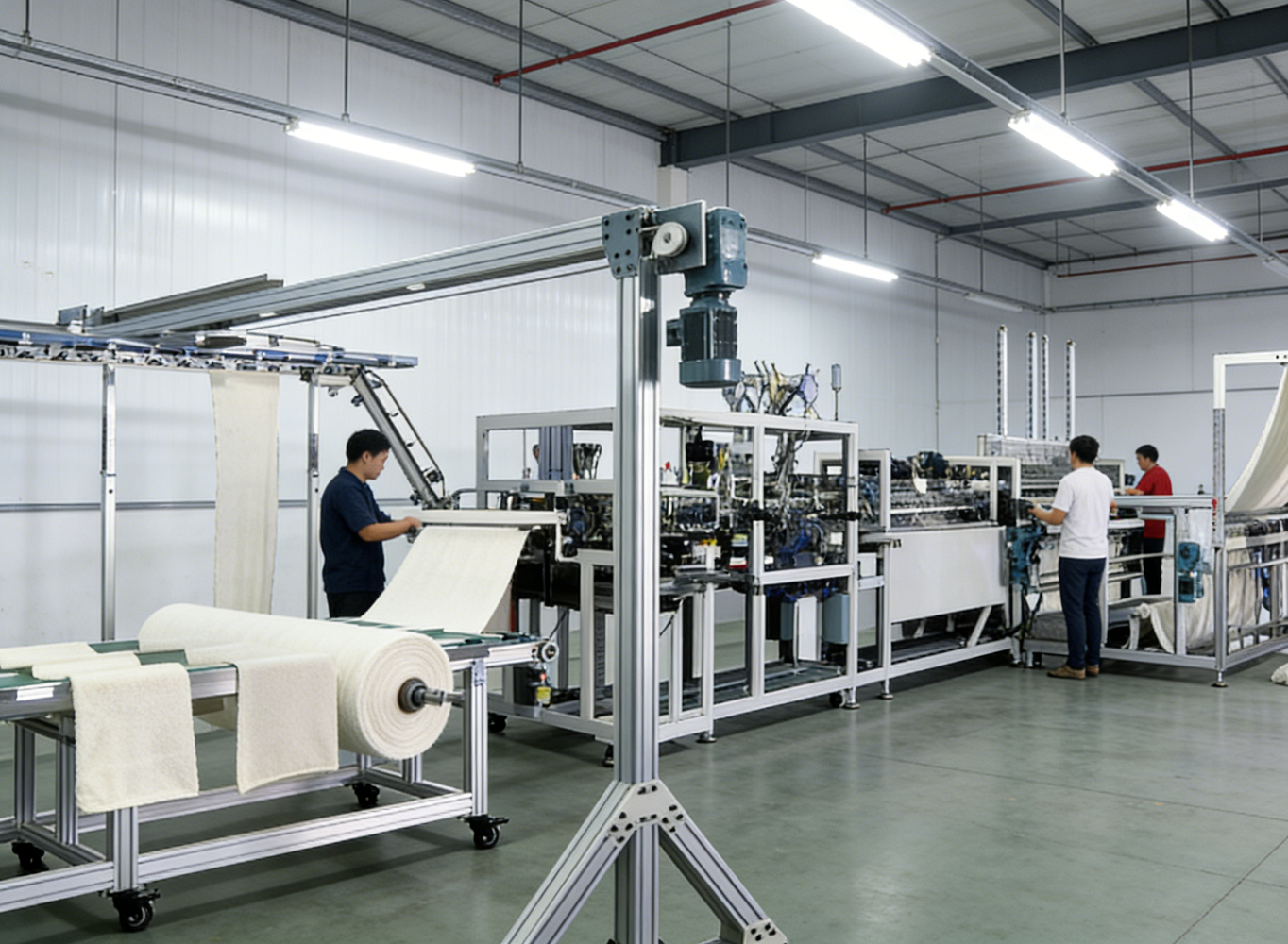
Needles play a critical role in towel sewing machines. Because towels are made from thick, dense fabrics, needles experience significant stress during operation. A dull or bent needle can cause a range of problems, including skipped stitches, fabric damage, and thread breakage. Operators should inspect needles frequently and replace them whenever signs of wear appear.
Common signs that a needle needs replacement include:
Irregular or loose stitches
Snagging or pulling fabric loops
Excessive thread breakage
Unusual machine vibration
Replacing needles regularly is a simple yet effective way to maintain sewing quality and prevent damage to delicate terry loops.
Thread tension must be carefully balanced when sewing towels. If the tension is too tight, stitches may pucker the fabric. If it is too loose, seams may become weak or uneven.
Regular tension checks ensure that both the upper thread and bobbin thread are balanced. Operators should test stitch samples whenever thread types, needle sizes, or fabric thickness change.
Proper tension adjustment results in:
Strong, durable seams
Smooth stitch appearance
Reduced thread breakage
Consistent tension control is particularly important in towel production where seams must withstand repeated washing and heavy use.
Feed dogs and presser feet work together to move fabric smoothly through the sewing machine. In towel production, these components face additional challenges because terry cloth is thick and textured.
Over time, feed dogs may wear down or accumulate lint, reducing their ability to grip the fabric properly. Worn presser feet can also affect fabric alignment and stitching accuracy.
Routine inspections should check for:
Worn or dull feed dog teeth
Misaligned presser feet
Debris blocking the feed system
Replacing worn parts promptly ensures stable fabric movement and prevents uneven stitching.
The motor is the powerhouse of an industrial towel sewing machine. Continuous operation at high speeds places heavy demands on the motor and drive belts.
Maintenance teams should regularly inspect motor components, including belts, pulleys, and electrical connections. Loose belts or worn drive components can cause inconsistent machine speeds and increased energy consumption.
Routine checks should include:
Tightening belts and fasteners
Inspecting electrical wiring
Ensuring proper ventilation around the motor
A well-maintained motor system improves efficiency and prevents costly breakdowns during production.
Preventive maintenance programs are essential in towel manufacturing facilities. Rather than waiting for machines to fail, scheduled inspections and servicing can identify potential issues early.
A typical preventive maintenance plan may include:
Daily cleaning and lubrication
Weekly mechanical inspections
Monthly calibration and adjustment
Annual professional servicing
By following a structured maintenance schedule, factories can minimize downtime and maintain steady production output.
Even the most advanced sewing machines require skilled operators who understand proper handling and basic maintenance procedures. Operator training plays a vital role in keeping towel sewing machines running efficiently.
Training programs should teach operators how to:
Perform routine cleaning and lubrication
Identify early signs of mechanical issues
Adjust thread tension and stitch settings
Replace needles safely and correctly
When operators are knowledgeable about machine care, they can quickly address small issues before they become major problems.
Consistent maintenance provides numerous benefits for towel production facilities. Well-maintained machines operate more efficiently and produce higher-quality results.
Key advantages include:
Reduced machine downtime
Improved stitch consistency
Lower repair and replacement costs
Extended equipment lifespan
Increased production efficiency
In competitive manufacturing environments, these advantages can significantly impact overall productivity and profitability.
Towel sewing machines play a crucial role in textile manufacturing, enabling producers to create durable, high-quality towels efficiently. However, the demanding nature of terry cloth fabrics and continuous high-speed operation means that these machines require regular care. By implementing proper cleaning routines, maintaining lubrication, monitoring needles, adjusting tension, and scheduling preventive maintenance, manufacturers can keep their machines running smoothly.
Combined with proper operator training and routine inspections, these practices help prevent costly downtime and maintain consistent production quality. Ultimately, investing time and effort into towel sewing machine maintenance is not just about protecting equipment—it is about ensuring stable, reliable production that supports long-term business success.

The TPET ET-6620 Automatic Pillow Cover Machine (US Type) is a high-efficiency, intelligent solution designed to revolutionize the production of American-style pillowcases, tailored to meet the demands of modern textile manufacturing. Built for speed...

The TPET ET-5816/GG 2nd Generation Automatic Terry Towel Length Hemming Machine is a state-of-the-art solution designed to revolutionize towel production efficiency and quality. As the main drafting unit of the industry standard “Automatic towe...

The ET-6628 Envelope Pillow Case Machine: A Milestone in Automated AB-Side Envelop Production From TPET Company.In the competitive landscape of modern textile manufacturing, efficiency, precision, and versatility are paramount. The ET-6628 Envelope P...

Equipped with advanced magnetic navigation technology, the autonomous vehicle ensures accurate path following and stable operation.

This automatic delivery vehicle is equipped with magnetic navigation technology and is designed for seamless integration with production lines.

 EN
EN